Hyenas Explained: Species, Behavior, Distribution in Uganda & Conservation Status

Hyenas are among Africa’s most misunderstood animals. Often labeled as scavengers or even “ugly,” the reality is far more compelling. With over a decade of field observation and interpretation behind this perspective, one thing is clear: hyenas are intelligent, efficient predators and essential players in maintaining healthy ecosystems.
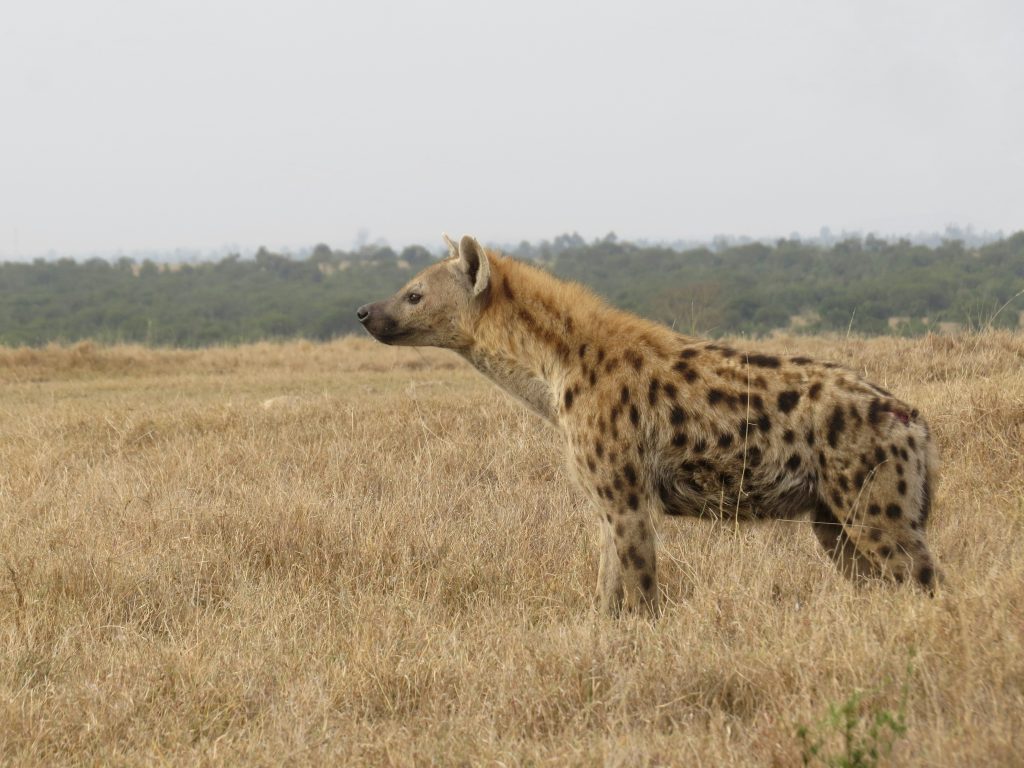
Hyenas belong to the family Hyaenidae, a group of carnivorous mammals more closely related to cats than dogs. They evolved millions of years ago and have developed one of the most powerful bite forces in the animal kingdom.
They are:
- Highly adaptable
- Socially intelligent
- Both hunters and scavengers
Their ability to consume almost every part of a carcass including bones makes them critical for environmental cleanliness and disease control.
Types of Hyenas (Species Overview)
There are four species of hyenas globally, each with distinct characteristics and habitats.
1. Spotted Hyena (Crocuta crocuta)
This is the most common and dominant species in Africa.
- Found across sub-Saharan Africa
- Highly social, living in clans
- Females are larger and lead the group
- Known for their “laughing” vocalizations
IUCN Status: Least Concern
2. Striped Hyena (Hyaena hyaena)
A quieter and more solitary species.
- Found in North and East Africa, the Middle East, and parts of Asia
- Prefers dry, rocky environments
- Mostly scavenges but can hunt small prey
IUCN Status: Near Threatened
3. Brown Hyena (Parahyaena brunnea)
Primarily found in southern Africa.
- Shaggy coat and strong scavenging behavior
- Lives in small groups
- Relies heavily on carrion
IUCN Status: Near Threatened
4. Aardwolf (Proteles cristata)
Very different from the others.
- Feeds mainly on termites
- Small, shy, and nocturnal
- Does not hunt large animals
IUCN Status: Least Concern
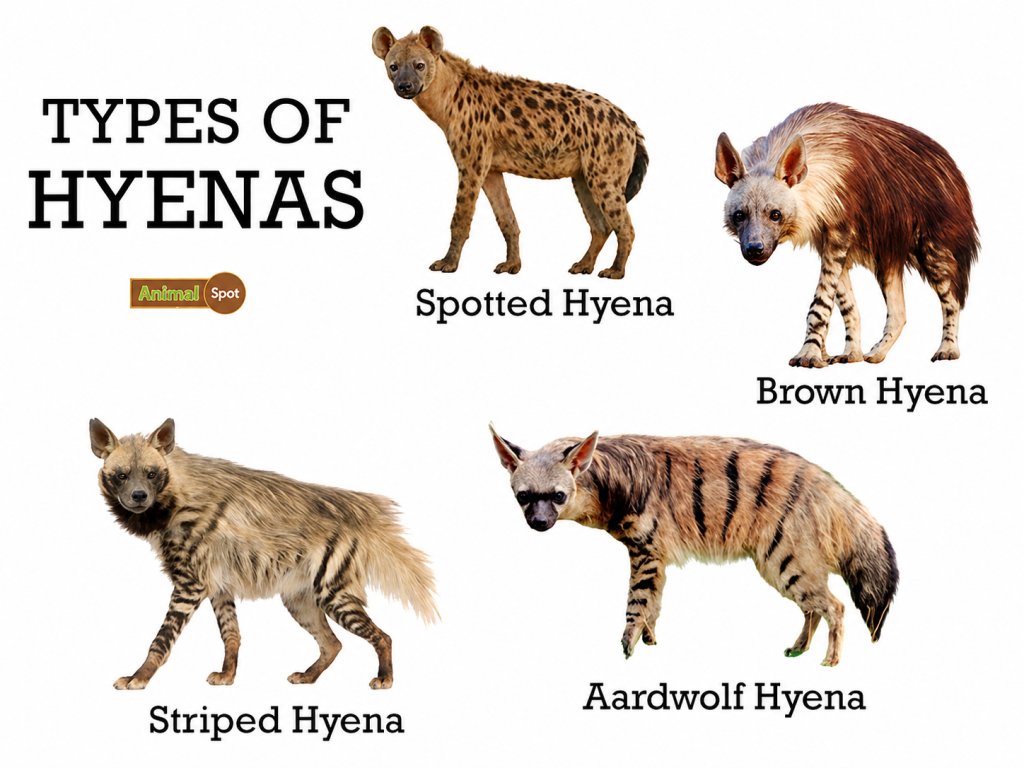
Each hyena species plays a different ecological role from powerful predator to insect specialist. Together, they form a critical part of the ecosystem, proving that “Hyena” is not a single story, but a diverse and highly adaptive group.
Hyenas in Uganda
Uganda is one of the best countries in East Africa to observe hyenas in the wild, particularly the Spotted Hyena. They can be found in the following National Parks;
- Queen Elizabeth National Park
- Murchison Falls National Park
- Kidepo Valley National Park
- Lake Mburo National Park
As these areas offer ideal conditions for their thriving populations: Open savannah landscapes, Abundant prey, and they are protected habitats
The striped hyena exists in northeastern Uganda (Karamoja region), but sightings are rare.
Key Characteristics of Hyenas
Hyenas are built for performance, not appearance.
- Strong jaws capable of crushing bones
- Excellent night vision and hearing
- Sloped back due to longer front legs
- Speeds of up to 60 km/h
Their digestive system is so powerful it can process bones, leaving almost no waste behind.
Behavior and Social Structure
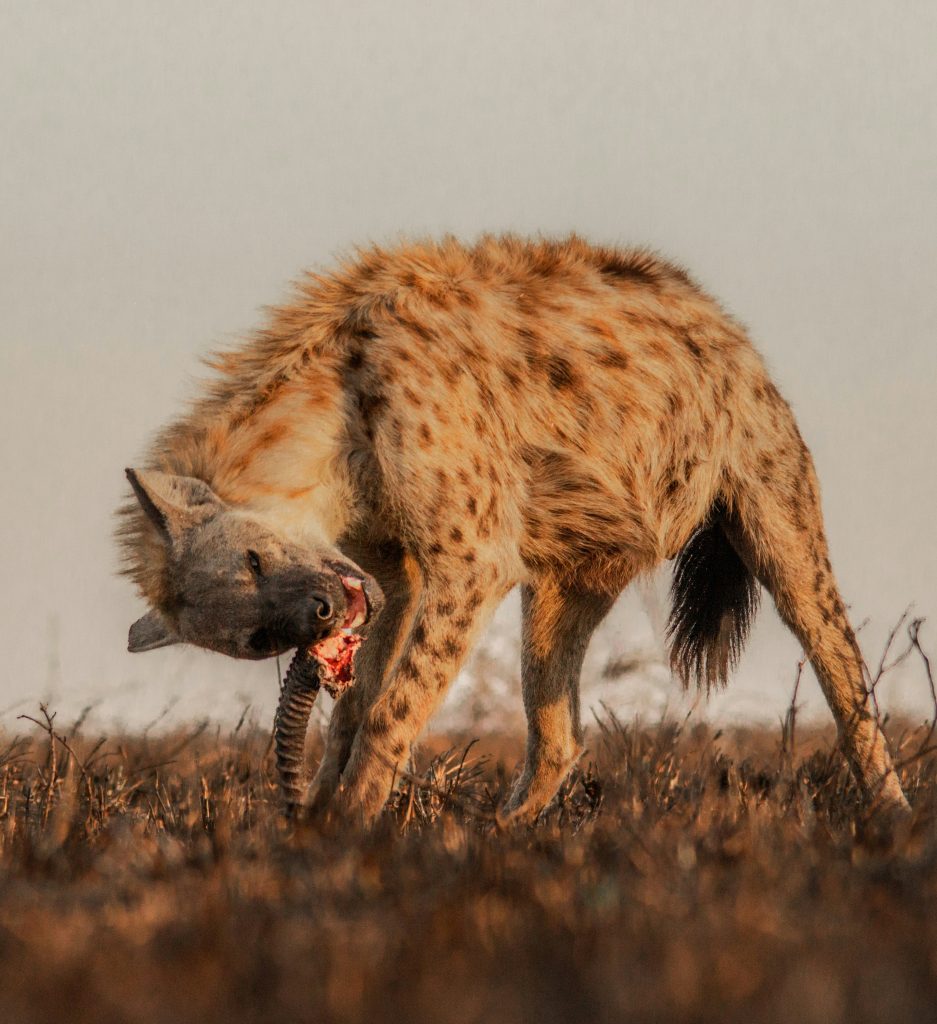
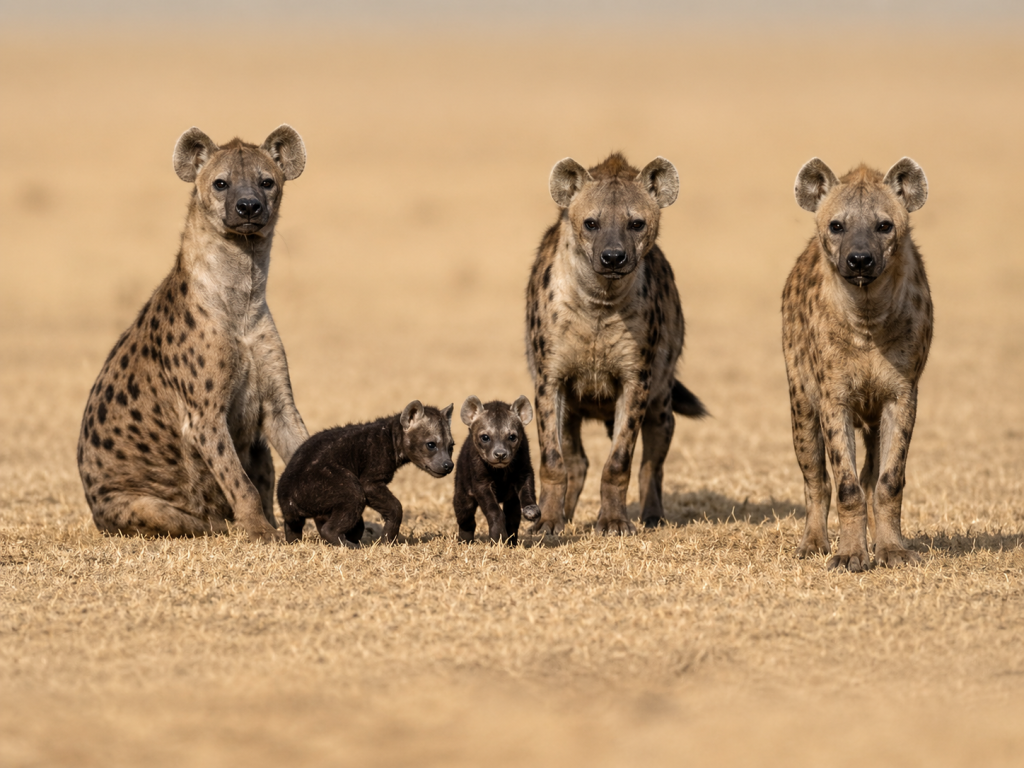
Spotted hyenas have one of the most complex social systems among mammals.
- Live in large clans with strict hierarchy
- Female-led societies
- Communicate using vocalizations, body language, and scent
Each individual knows its rank, and this structure helps maintain order during feeding and hunting.
The “Pseudo-Penis” in Hyenas
One of the most unique and often misunderstood features of the spotted hyena is the female’s pseudo-penis a structure that looks like a male organ but serves a different biological purpose.
In female spotted hyenas:
- The clitoris is elongated, forming what is called a pseudo-penis
- It is used for urination, mating, and even giving birth
- Females also have no external vaginal opening, making reproduction more complex
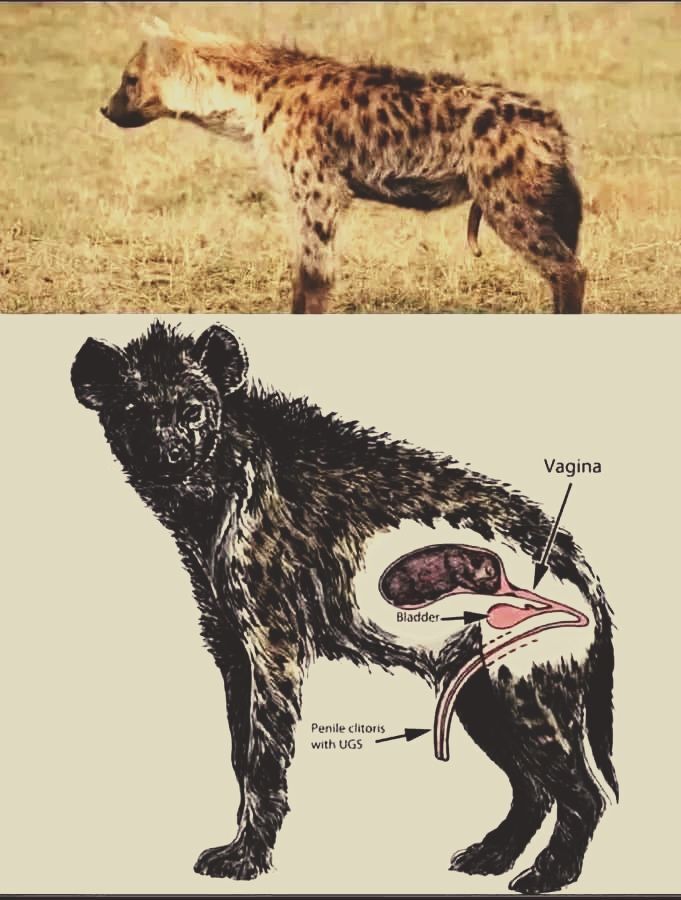
This structure is directly linked to female dominance. High levels of hormones (especially androgens) during development contribute to:
- Larger, more dominant females
- Strong control over mating
- A clear power structure within the clan
The harsh reality is giving birth through this structure is extremely difficult:
- First births can be high-risk
- Cubs must pass through a narrow canal
- Mortality rates for first-time mothers and cubs can be higher
The pseudo-penis is not just a biological curiosity but it is rather a defining feature of Hyena society, reinforcing female dominance and making their reproductive process one of the most challenging in the animal kingdom.
Reproductive Cycle of Hyenas
Hyena reproduction is one of the most demanding and strategic processes in the wild, particularly in the Spotted Hyena, where female dominance shapes every stage.
Mating is not guaranteed males must integrate into a clan and gain acceptance from females, who control reproduction. After a gestation period of about 3–4 months, the female gives birth in a secluded den.
What follows is striking:
- Cubs are born with eyes open and fully developed teeth
- They are active almost immediately built for survival from day one
Early life is highly competitive. In litters of two, sibling rivalry can be intense, sometimes resulting in only one cub surviving. This is not random it is nature’s way of ensuring strength and resilience.
The mother plays a critical role:
- Produces extremely nutrient-rich milk, among the richest in mammals
- Provides protection and guidance for over a year
- Introduces cubs into a strict social hierarchy
Cubs inherit their social rank directly from their mother, meaning their position in the clan and future success is determined early.
Hyena reproduction is not just about birth, it is a structured system that produces strong, competitive individuals, ensuring the survival of the species in challenging environments.
Diet: Hunter or Scavenger?
Let’s be direct—hyenas are skilled hunters.
- Spotted hyenas hunt most of their food
- They target antelope, zebra, and even buffalo
- Will scavenge when the opportunity arises
Aardwolves are the exception, feeding almost entirely on termites.
Why Hyenas Matter in the Ecosystem
Hyenas play a critical role in maintaining ecological balance.
- Clean up carcasses, reducing disease spread
- Control herbivore populations
- Compete with other predators, maintaining balance
Without hyenas, ecosystems would quickly become unstable.
Common Myths About Hyenas
- “Hyenas are cowardly scavengers”
False. They are effective hunters and often dominate other predators.
- “Hyenas are ugly animals”
This is a perception issue. Their design is purely functional and highly efficient.
- “Hyenas laugh because they are happy”
The “laugh” is actually a communication signal, often linked to tension or excitement.
- “Hyenas are dangerous to humans”
Attacks are rare and usually linked to human encroachment or food shortages.
Hyena Conservation and Threats
Hyenas remain resilient, but their long-term survival is under increasing pressure across Africa and beyond. While species like the Spotted Hyena are still relatively stable, others such as the Striped and Brown Hyenas are already facing decline.
Key Threats
- Habitat Loss: Expansion of agriculture, settlements, and infrastructure is reducing the natural range of hyenas, especially in unprotected areas.
- Human-Wildlife Conflict: Hyenas are often killed in retaliation for livestock predation, even when the actual cause is uncertain.
- Poisoning and Trapping: Indiscriminate poisoning aimed at other predators frequently affects hyenas.
- Negative Perception: Deep-rooted myths and cultural stigma lead to unnecessary persecution and lack of conservation priority.
Conservation Focus
Effective conservation of hyenas depends on:
- Protecting key habitats and wildlife corridors
- Community education to reduce conflict and myths
- Strengthening law enforcement in protected areas
- Promoting their ecological value in tourism and conservation messaging
Hyenas don’t just survive in the wild—they help hold ecosystems together. Protecting them is not optional; it is essential for maintaining balance in the landscapes where they exist.
Hyenas and Wildlife Tourism in Uganda
From a tourism perspective, hyenas are under-utilized assets.
They offer:
- Unique night game drive experiences
- Fascinating behavioral observations
- Strong storytelling opportunities for guides
When properly interpreted, Hyenas shift from being overlooked to becoming a highlight on any of our safaris.
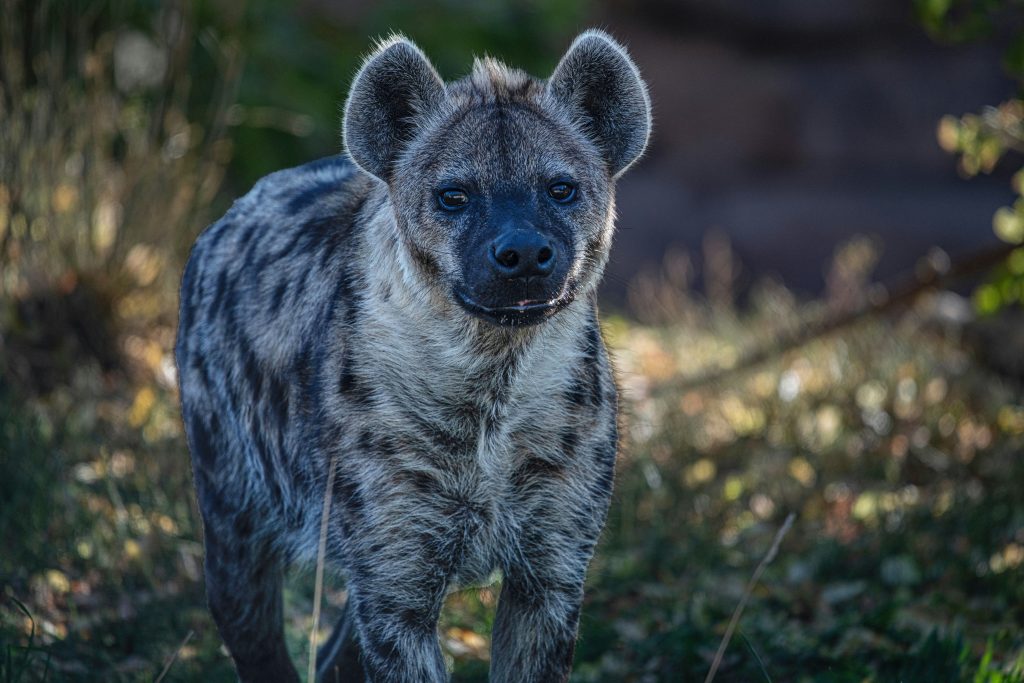
In Conclusion, Hyenas are not secondary players in the wild but they are strategic predators and ecological enforcers. The challenge is not their behavior, it’s the perception.
For conservationists, tour operators, and wildlife enthusiasts, the opportunity is clear:
- Educate
- Reframe the narrative
- Showcase their true value
That is how you turn misunderstanding into appreciation, and appreciation into conservation impact.