African Jacana: The ‘Lily Trotter’ of Uganda’s Wetlands

Among Uganda’s lush wetlands and sparkling lakes, few birds capture the imagination quite like the African Jacana (Actophilornis africanus). Famous for their enormous toes and graceful steps across floating vegetation, these birds are often called “Lily Trotters” and Uganda offers some of the finest places to see them in action.
Identification & Description
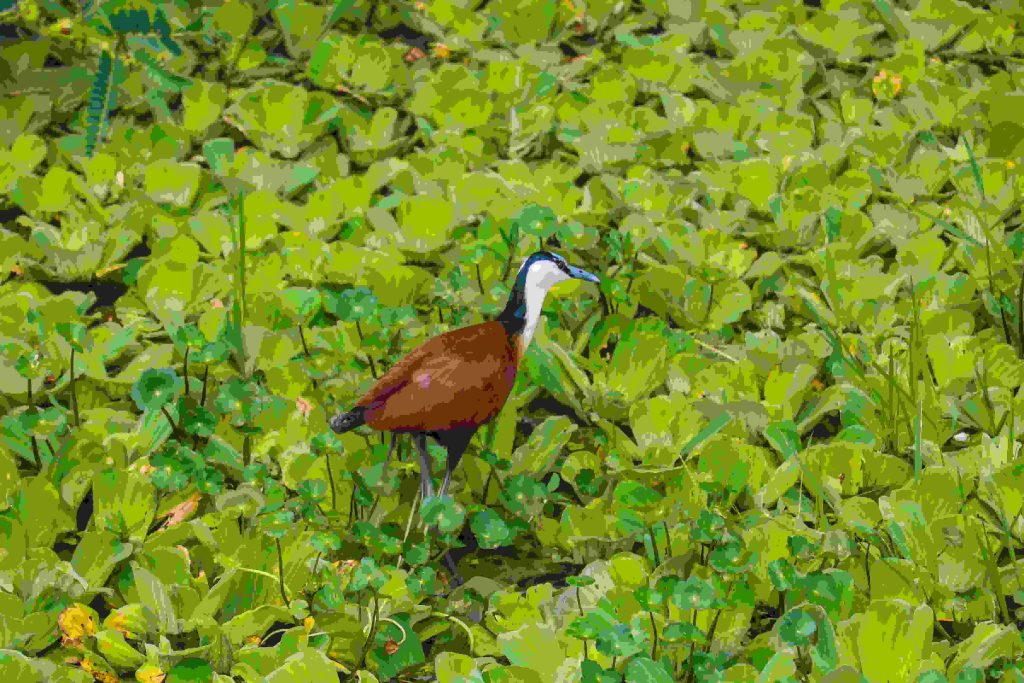
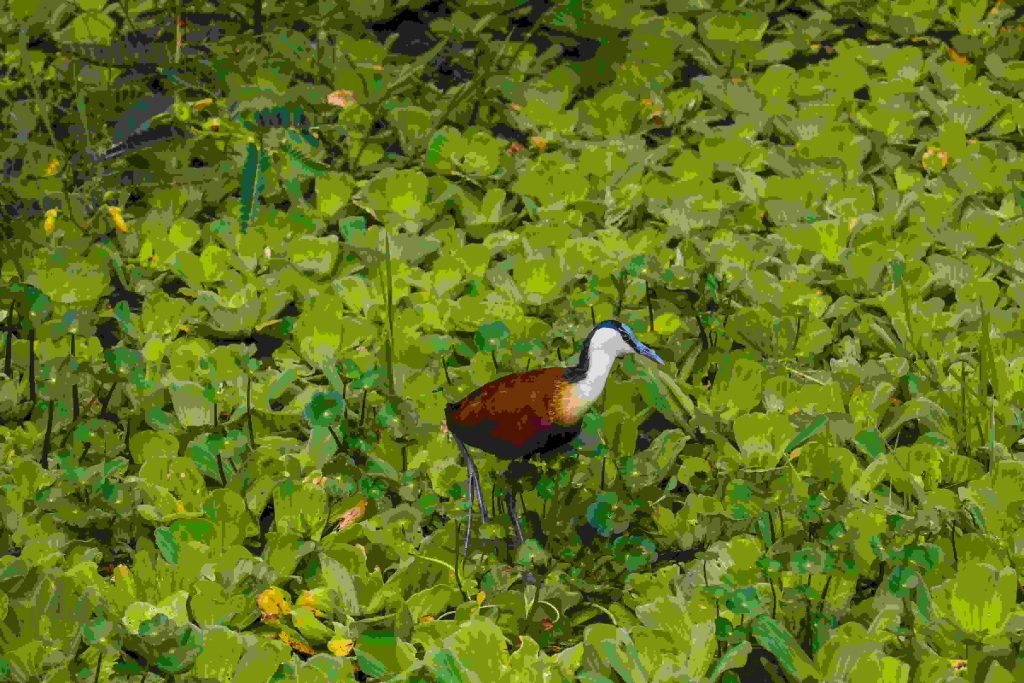
The African Jacana is easy to spot in Uganda’s swamps and waterways thanks to its vivid colors and distinctive shape.
Key Features:
- Chestnut-brown body with a white face and throat
- Striking black crown extending down the back of the neck
- Slender bluish bill with a bluish forehead shield
- Long grey legs with famously elongated toes for walking on floating vegetation
Ugandan Habitats & Best Locations
Uganda’s wetlands are a haven for the African Jacana, offering abundant floating plants like water lilies, which are essential for their lifestyle.
Top Locations in Uganda:
- Mabamba Swamp (Lake Victoria)
Famous for Shoebills, but jacanas abound here too—easily seen on canoe rides. - Kazinga Channel (Queen Elizabeth National Park)
During boat safaris, jacanas are often seen walking across floating vegetation right next to hippos and buffalo. - Lake Mburo National Park
One of Uganda’s best spots for wetland birds; jacanas are frequently seen here along with papyrus specials. - Victoria Nile Delta (Murchison Falls National Park)
Look out for them while searching for Shoebills. - Bigodi Wetland Sanctuary (Near Kibale Forest)
A great spot for birders and nature lovers seeking jacanas and other swamp species on guided walks.
Behavior & Diet
African Jacanas in Uganda feed mainly on aquatic invertebrates, darting between lily pads and probing shallow water.
Diet Includes:
- Water beetles
- Dragonfly larvae
- Snails
- Small fish
- Seeds from aquatic plants
They often give an illusion of gliding over water, thanks to their long toes distributing their weight across vegetation.
Breeding in Uganda: A Role Reversal
Uganda’s warm, wet climate makes it ideal for the African Jacana breeding almost year-round, with peaks during the rainy seasons.
Fascinating Facts:
- Females are larger and territorial; they mate with multiple males.
- Males handle incubation and chick-upbringing duties.
- The male builds a floating nest and carries chicks under his wings to safety.
Breeding Sites:
Swampy areas and other stable wetlands are often used for nesting.
Sketch Idea:
A male jacana carrying chicks under his wings as he walks across a pond showing Uganda’s hidden wetland dramas.
Calls & Sounds
Jacanas are quite vocal, especially during breeding season or territorial disputes:
- Nasal, piping “kweeah” or sharp “kwiik” calls often heard around swamps.
Call
Song
Conservation in Uganda
Though listed as Least Concern globally, African Jacanas in Uganda depend on healthy wetlands.
Threats:
- Wetland drainage for farming or development
- Pollution
- Climate-driven habitat changes
Conservation Areas:
Protected sites like Mabamba Wetland and Queen Elizabeth NP provide strongholds for this species. You find them along the swampy areas of shores of lakes as they are common
Why Every Ugandan Birding Trip Needs the African Jacana
Beyond its beauty, the African Jacana is a symbol of Uganda’s wetland ecosystems. Watching them tiptoe across lily pads or seeing a male carry his chicks is a highlight on many birding safaris—plus, they’re highly photogenic!