
Musambwa Island Reptile Exploration – Trip Report (14 March 2026)

On 14 March 2026, an adventurous group of conservation enthusiasts set out for an unforgettable expedition to Musambwa Island, one of the most unique wildlife sanctuaries on Lake Victoria. The exploration was led by renowned snake conservationist James Ntulume, founder of Snakes Uganda, who guided participants through a remarkable day of reptile education, bird observation, and cultural learning. Although the day began later than expected, the enthusiasm of participants ensured the adventure continued smoothly.
Journey from Malembo Beach to Musambwa Island
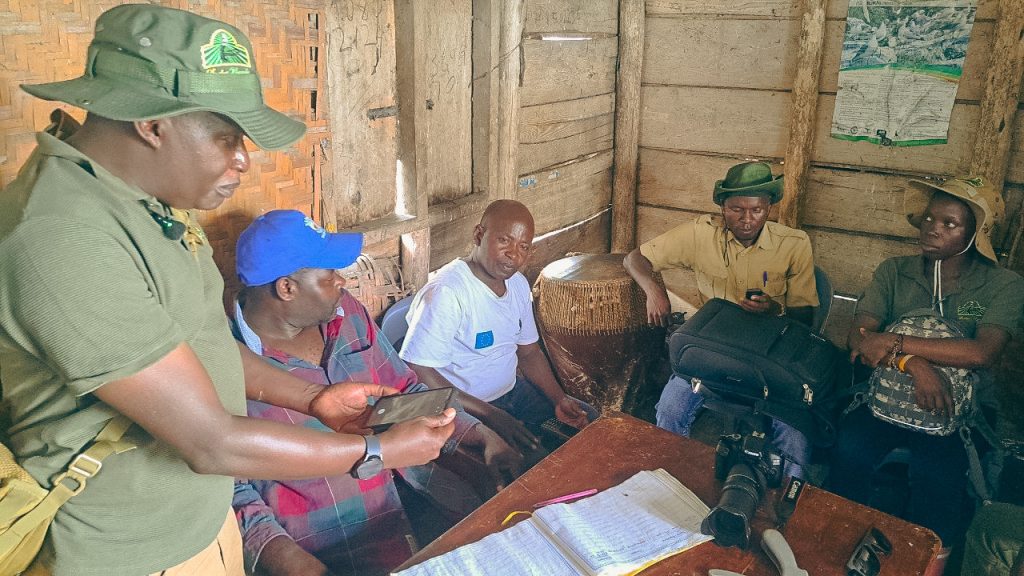
The group assembled at Malembo Beach, the main gateway to Musambwa Island. Before departure, the participants received a briefing from Mr Enock Ntale, the chairman of the island community and an experienced fisherman who has lived around the island for many years.
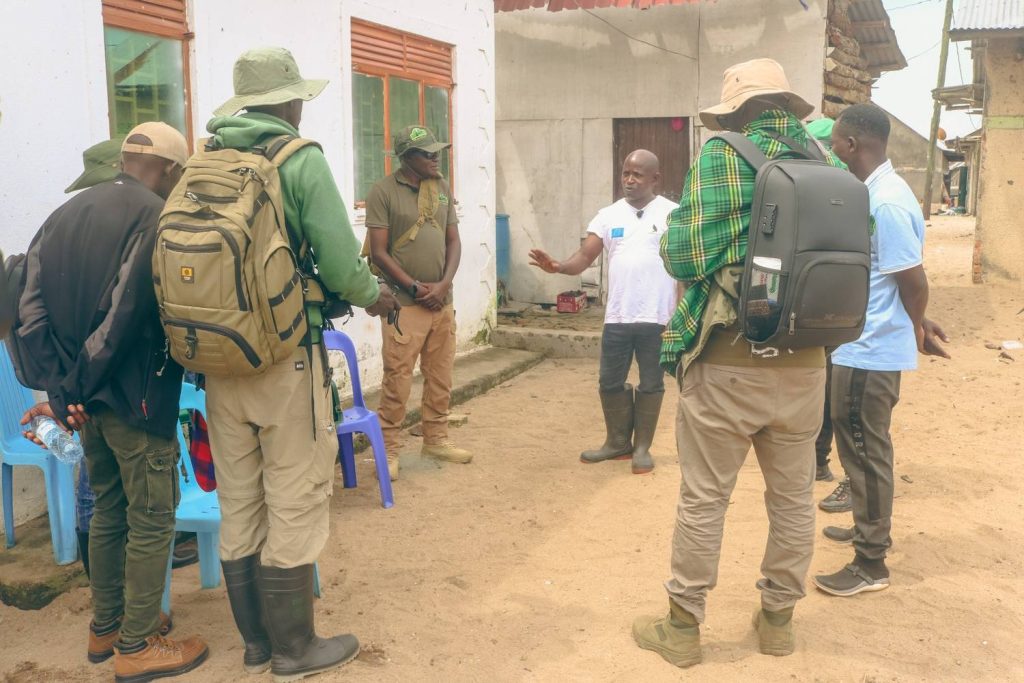
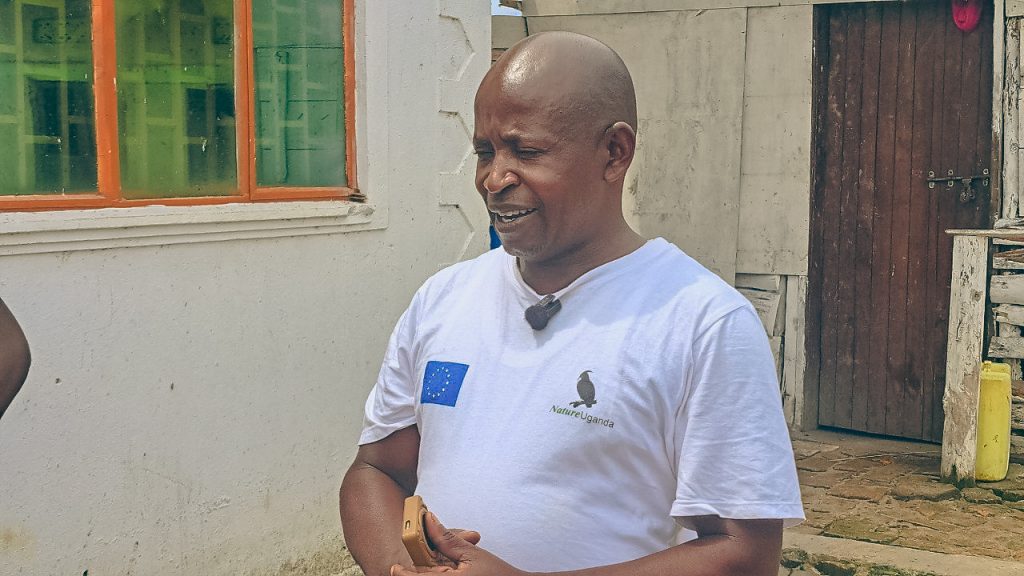
Mr Ntale shared insights about the history of the island and the cultural traditions that protect its wildlife. He explained how the island’s strong conservation rules have helped safeguard its bird colonies and natural ecosystem.
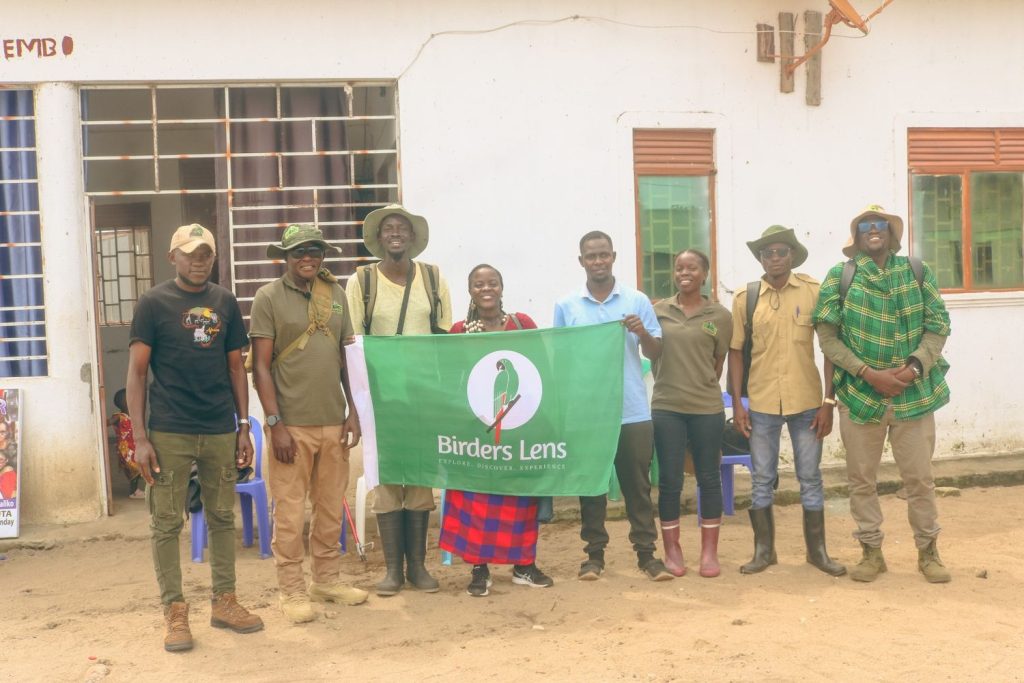
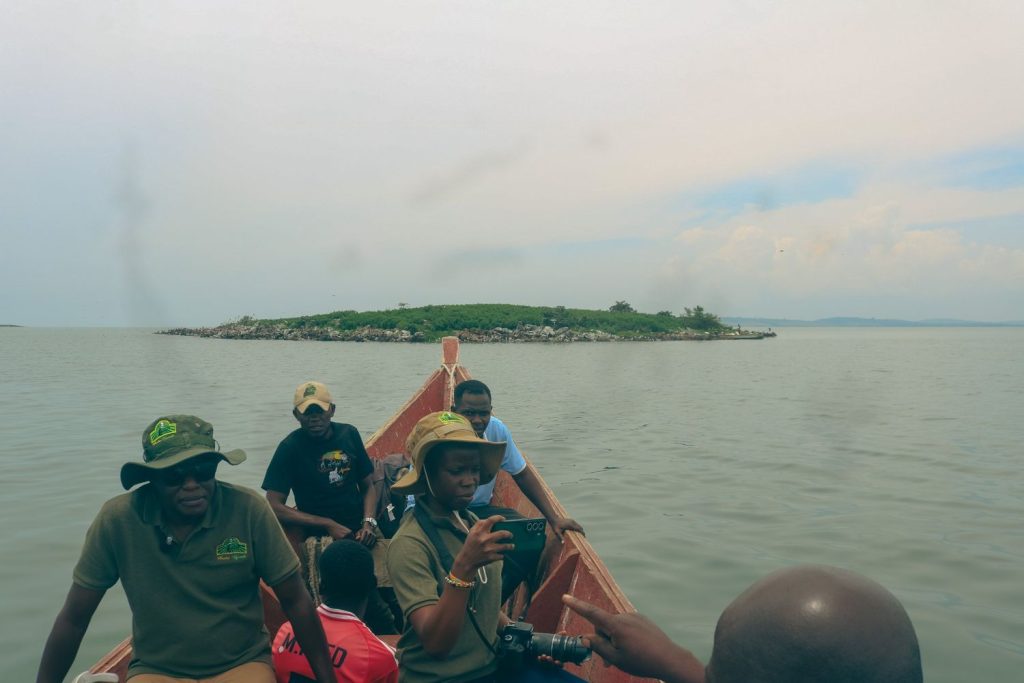
After the briefing, the group embarked on a 45-minute boat journey across Lake Victoria, heading toward one of Uganda’s most fascinating conservation areas.
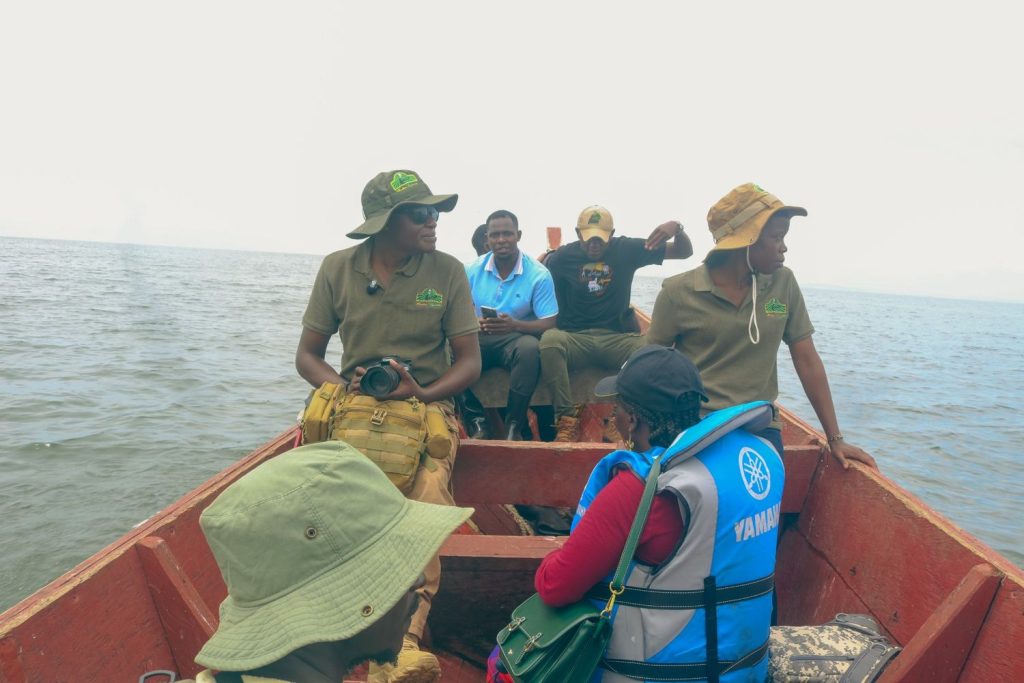
Thousands of Grey-headed Gulls Welcome Visitors
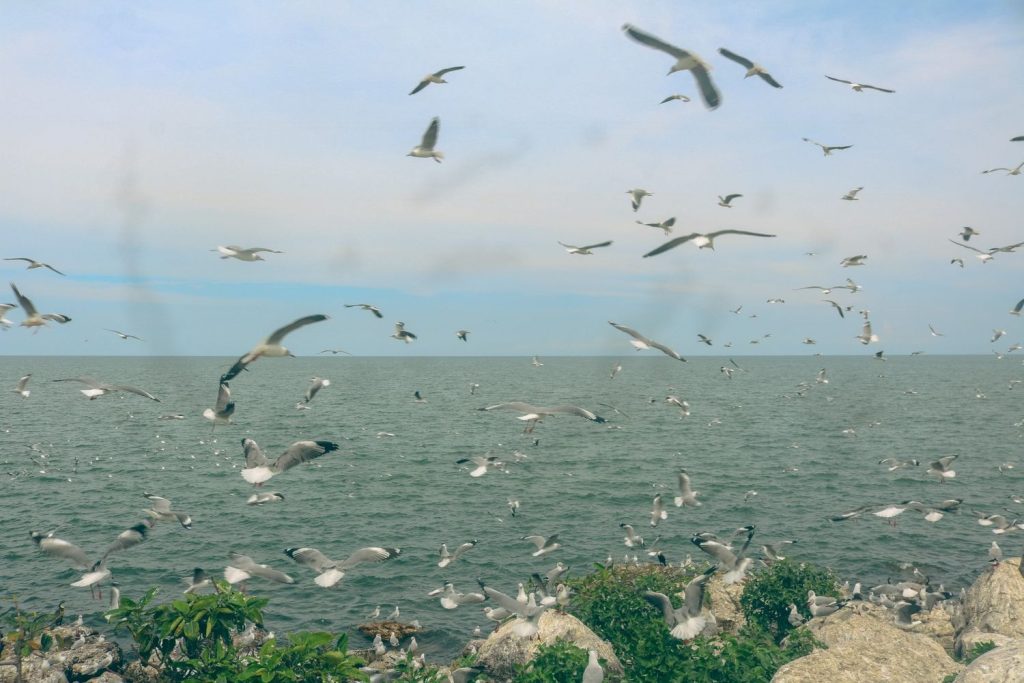
As the boat approached the island, the first thing that captured everyone’s attention was the overwhelming number of birds surrounding the rocky landscape. Thousands of Grey-headed Gull filled the skies and covered the rocks, their loud calls echoing across the water. The sound created a powerful atmosphere that many participants described as both dramatic and calming.
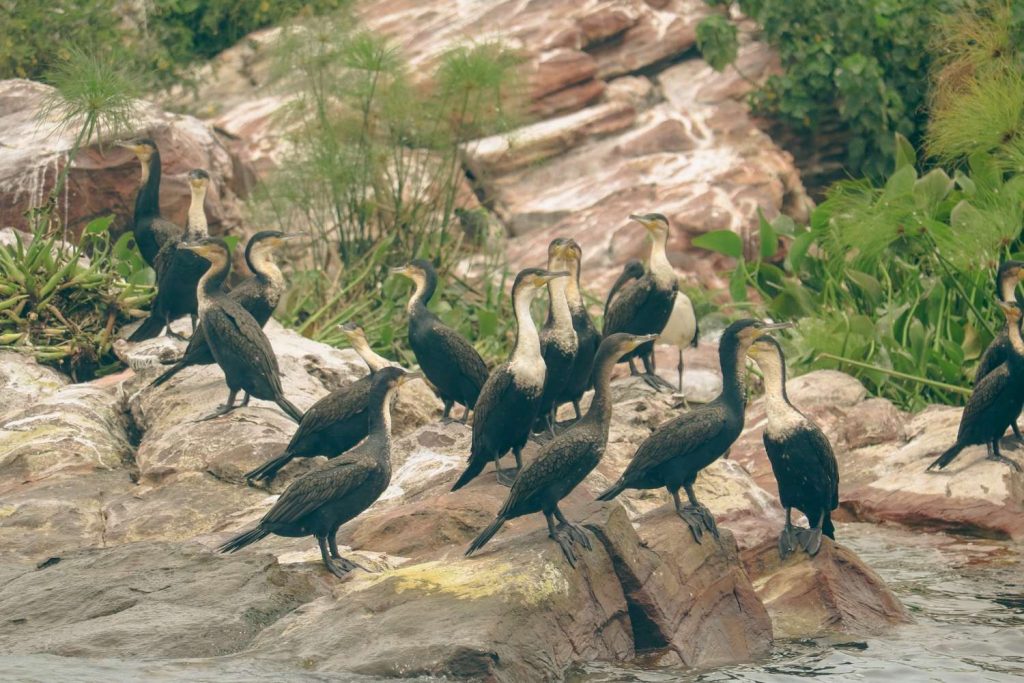
Other bird species observed around the island included:
- Great White Pelican
- Sacred Ibis
- Great Cormorant
- Reed Cormorant
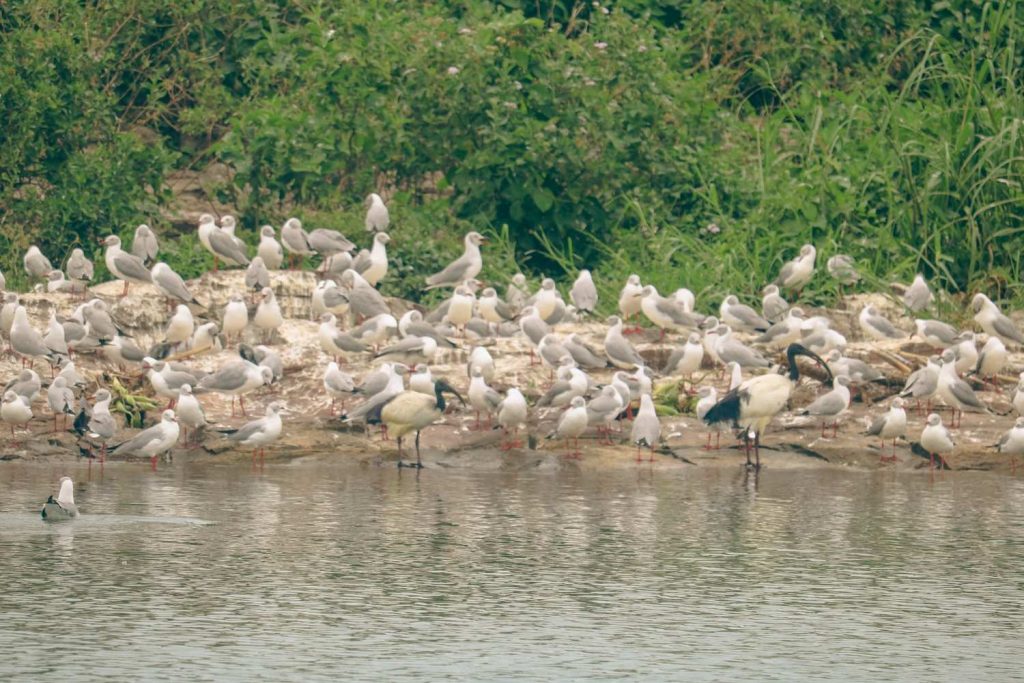
The incredible concentration of birds highlighted the importance of Musambwa Island as a breeding ground for waterbirds on Lake Victoria.
Snake Encounters Led by James Ntulume
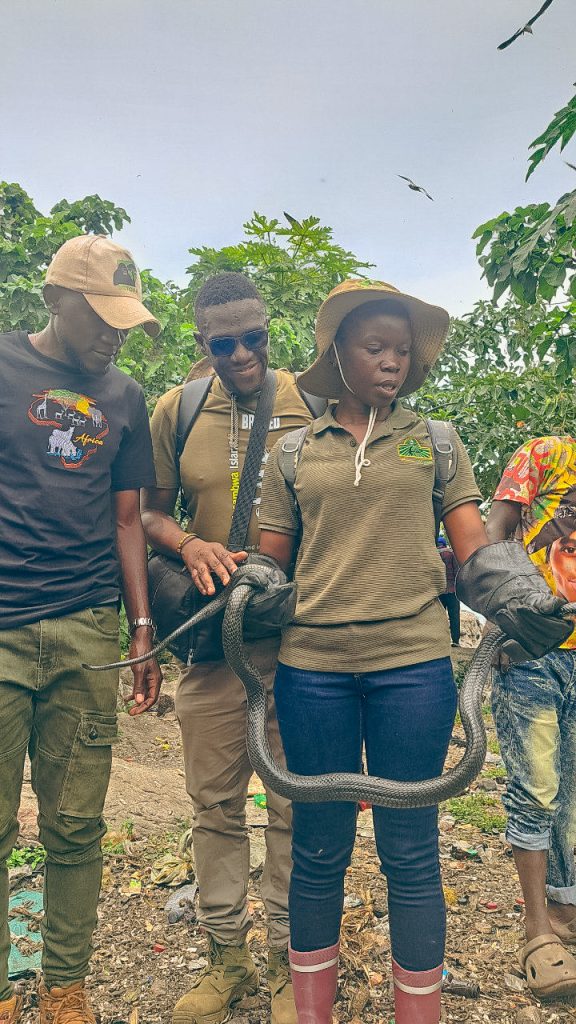
Once on the island, visitors registered with the community leadership before beginning the reptile exploration. Within a short time, Mr James Ntulume successfully located the group’s first snake encounter, a Eastern Forest Cobra.
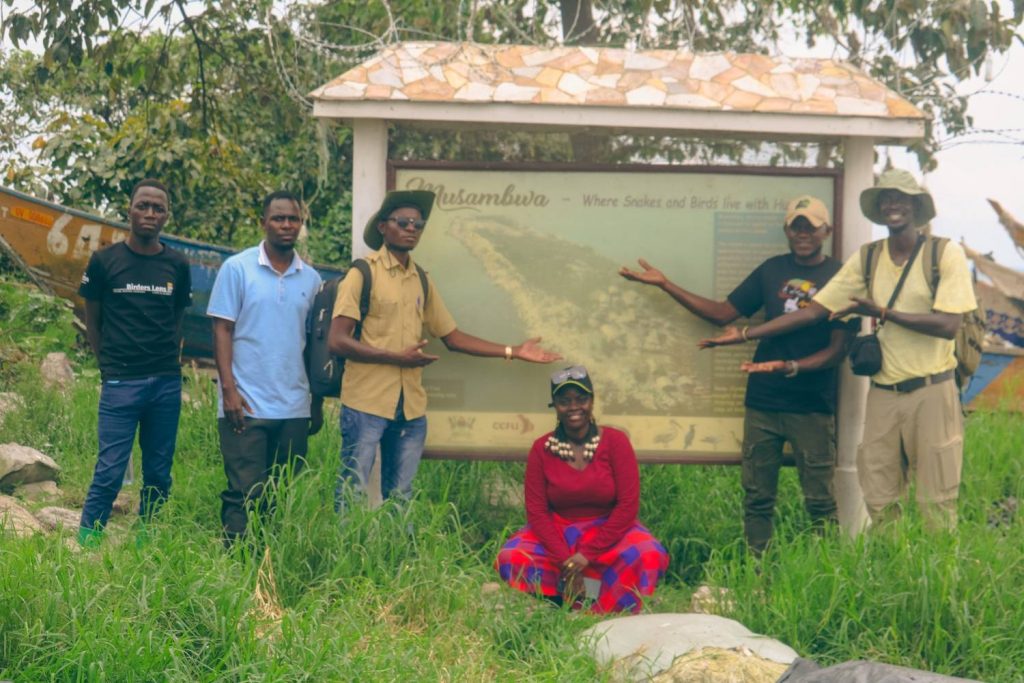
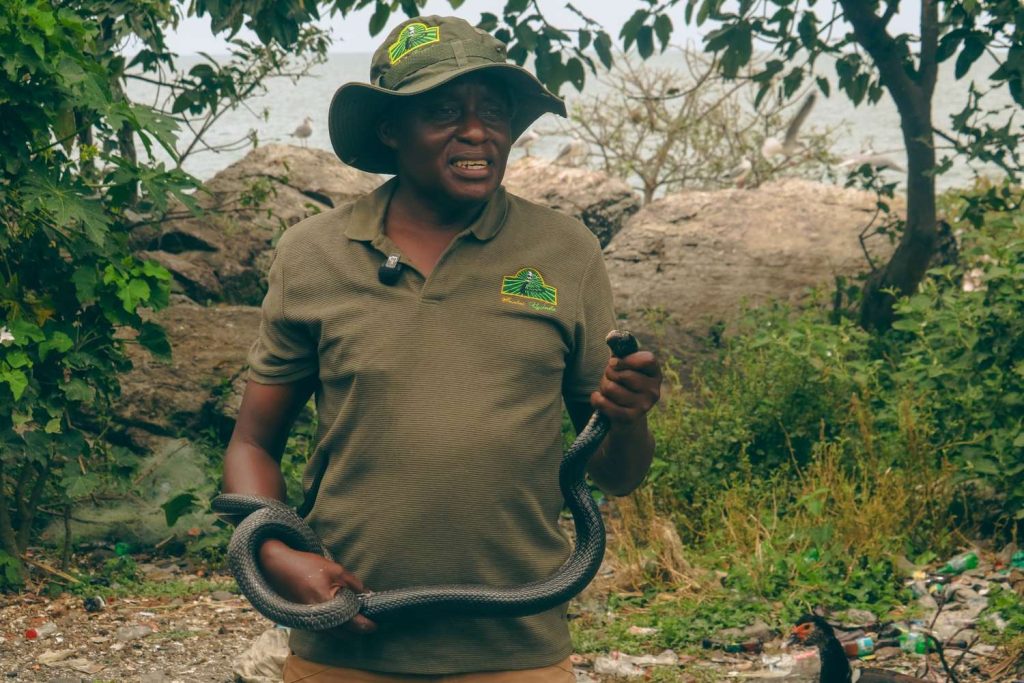
Participants gathered around as he conducted a detailed educational session explaining:
- snake behaviour
- how to identify male and female species of snakes
- safety around snakes
- the ecological role snakes play in nature
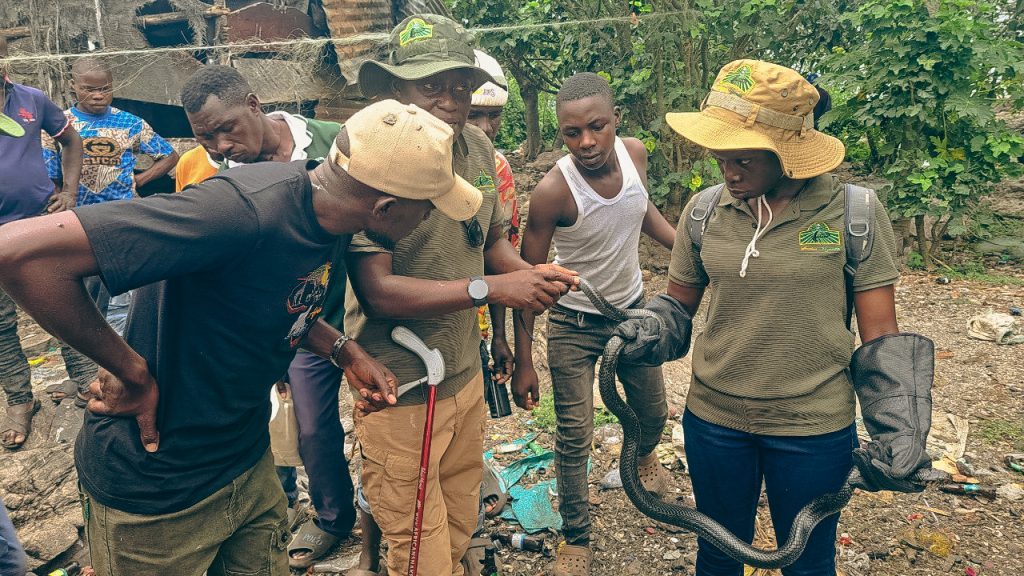
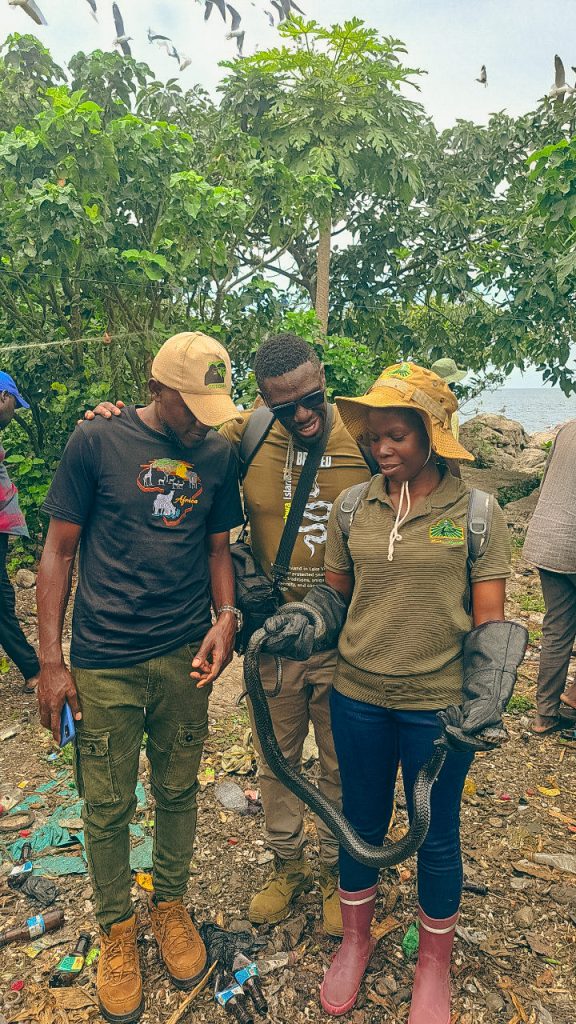
Some participants even gathered the courage to take photographs with the cobra under controlled conditions. The snake was safely handled by Ms Doreen Kakai, a member of the Snakes Uganda team.
Living with Snakes on Musambwa Island
One of the most astonishing parts of the trip was learning how fishermen on the island coexist with snakes.
The residents shared stories that seemed almost unbelievable to visitors, including a situation where a fisherman sat inside his house with a cobra quietly resting under his chair, and another where a snake reportedly appeared beside a fisherman while he watched evening news on NTV Uganda.
For the island community, however, such encounters are simply part of everyday life.
Women Who Braved Cultural Barriers
Musambwa Island is not only known for wildlife but also for its strong cultural traditions. Women are allowed to visit the island, but spending the night there is traditionally forbidden, as it is believed to anger the spiritual guardians of the island and cause strong winds and waves on the lake.
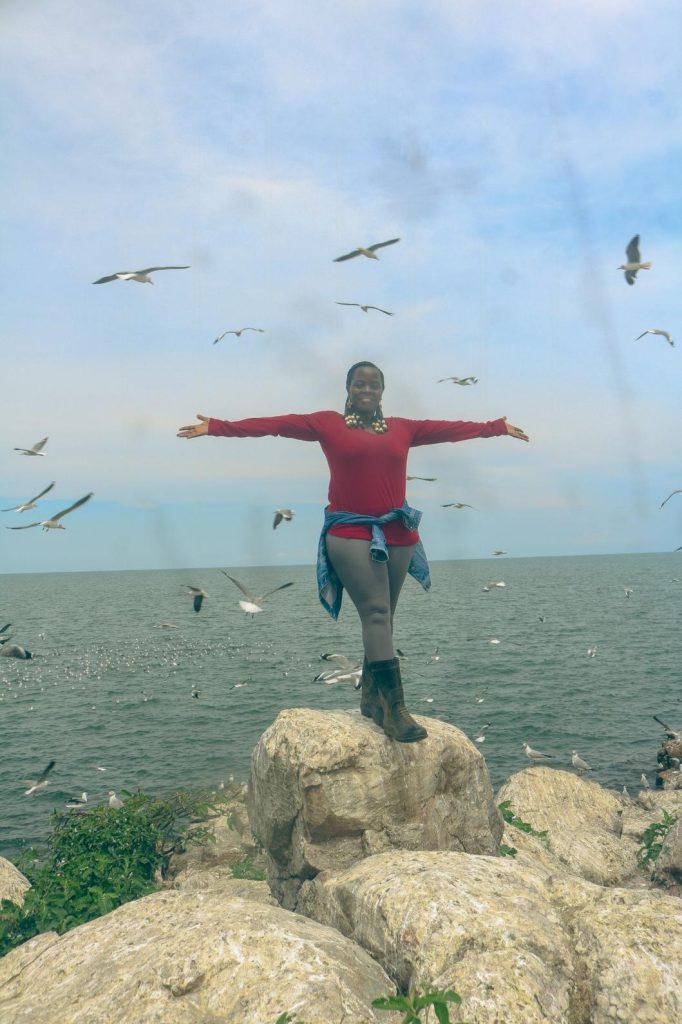
Despite this belief, we had female participants who bravely joined the exploration. Among them was Ms Dinah Kansiime and Ms Doreen Kakai, whose participation symbolized courage and curiosity in conservation learning. Their presence added a powerful dimension to this trip.
Exploring the Grey-headed Gull Breeding Colonies
Participants later explored sections of the island where Grey-headed gulls nest in large colonies.
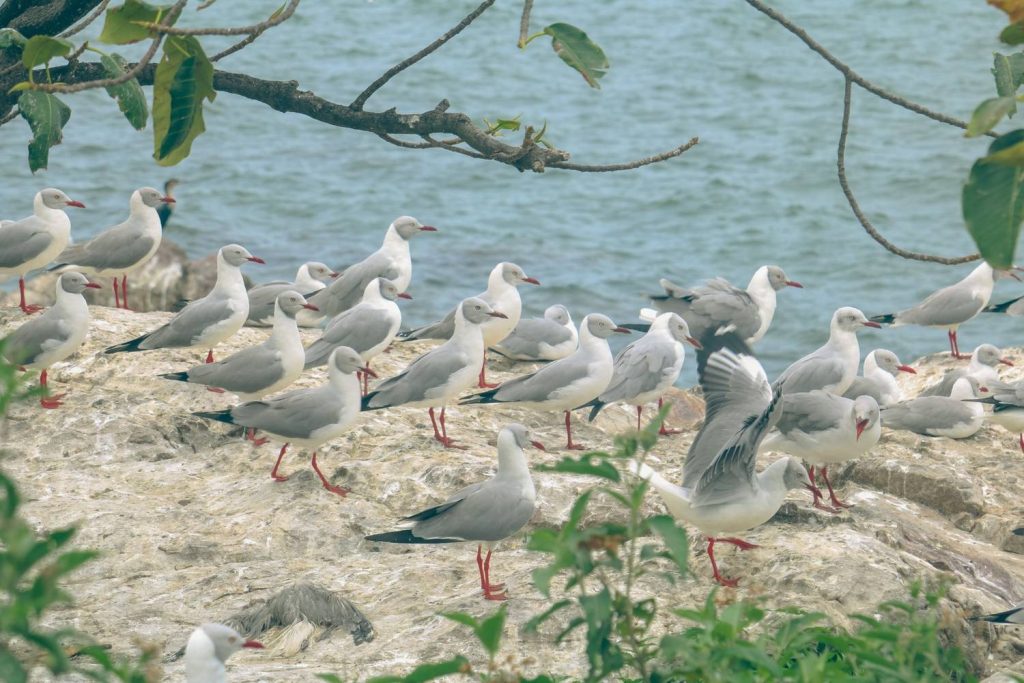
The rocky surfaces were covered with:
- gull chicks
- freshly laid eggs
- eggshell remains
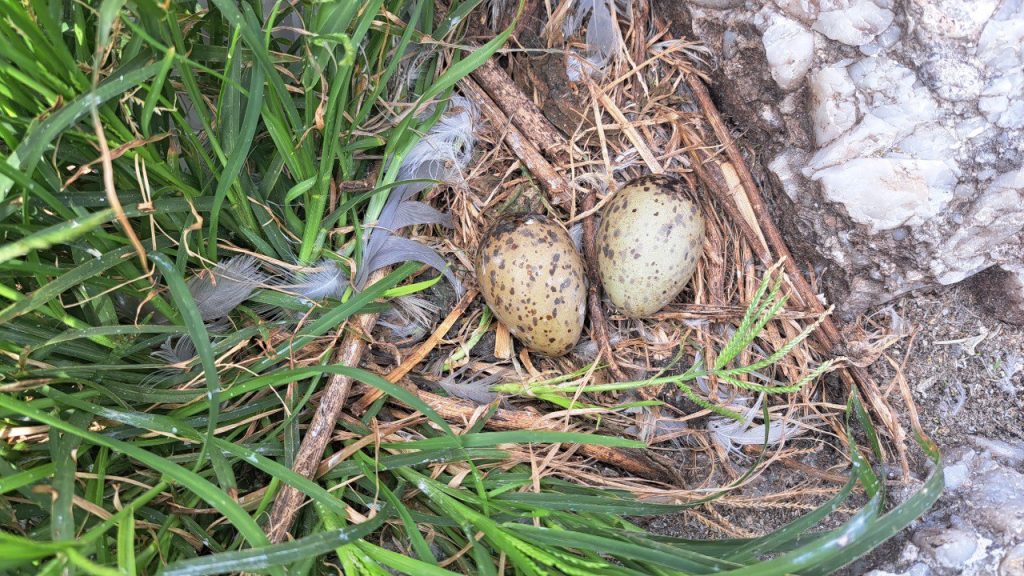
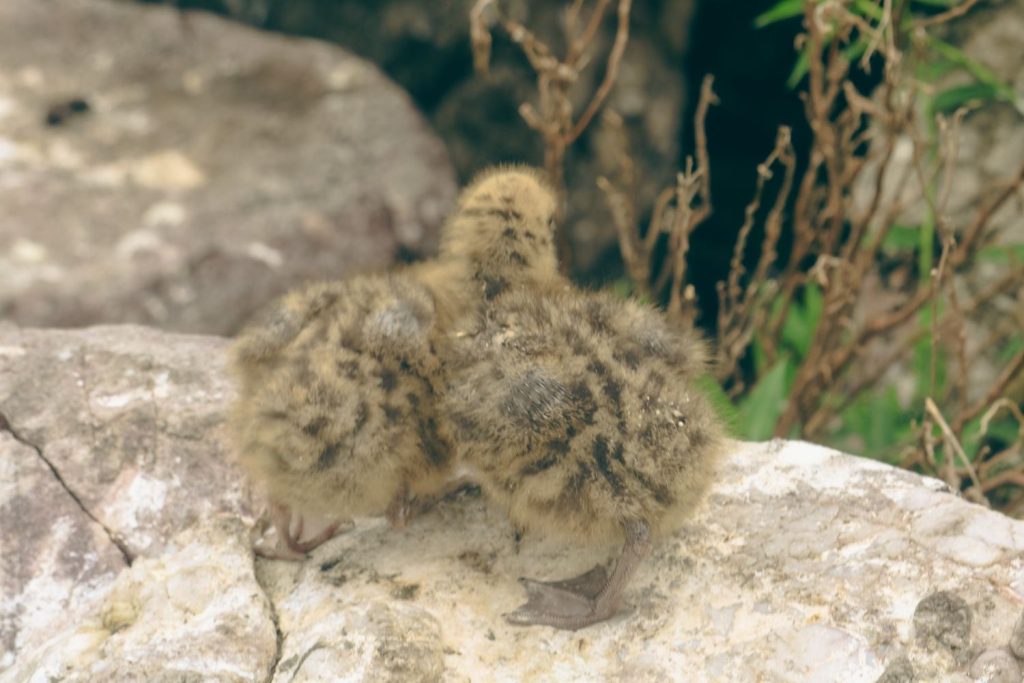
Among the shells, James Ntulume also identified remains believed to be from Eastern Forest Cobra eggs, showing that snakes and birds share the same ecosystem on the island.
Despite the loud bird calls, many visitors found the environment surprisingly peaceful and deeply immersive.
Meeting the 105-Year-Old Spiritual Leader
Before departing the island, we had the rare privilege of meeting Katongole Emmanuel, the 105-year-old spiritual leader of the Musambwa Island community. Mr Katongole has lived on the island since the early 1960s and remains one of its earliest residents.
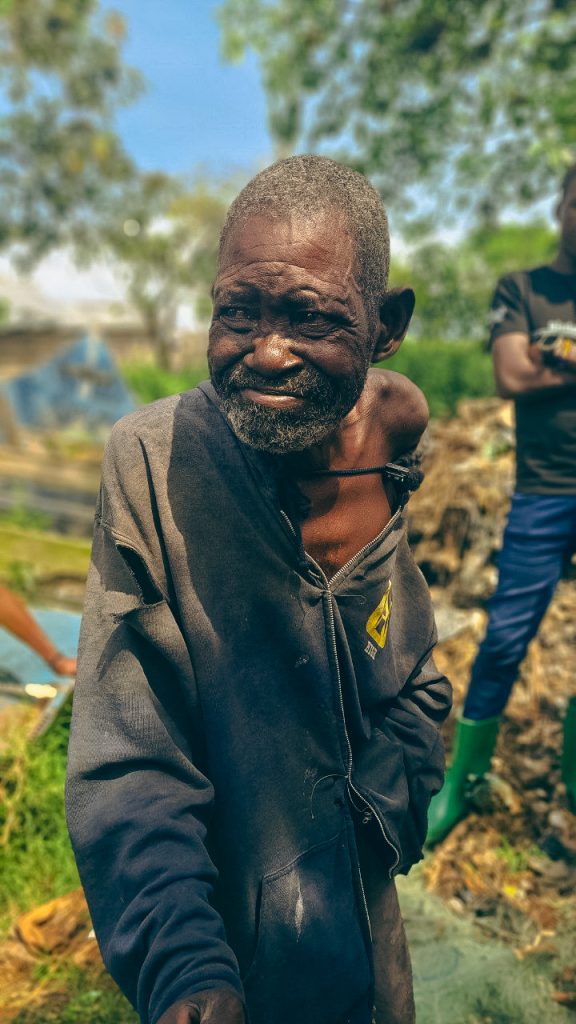
He explained that the island’s survival as a wildlife sanctuary is largely due to strict cultural rules that discourage harming wildlife and emphasize respect for nature. Musambwa Island is also considered a spiritual site where some visitors come seeking blessings or guidance.
A Hands-on Experience with the Congo File Snake
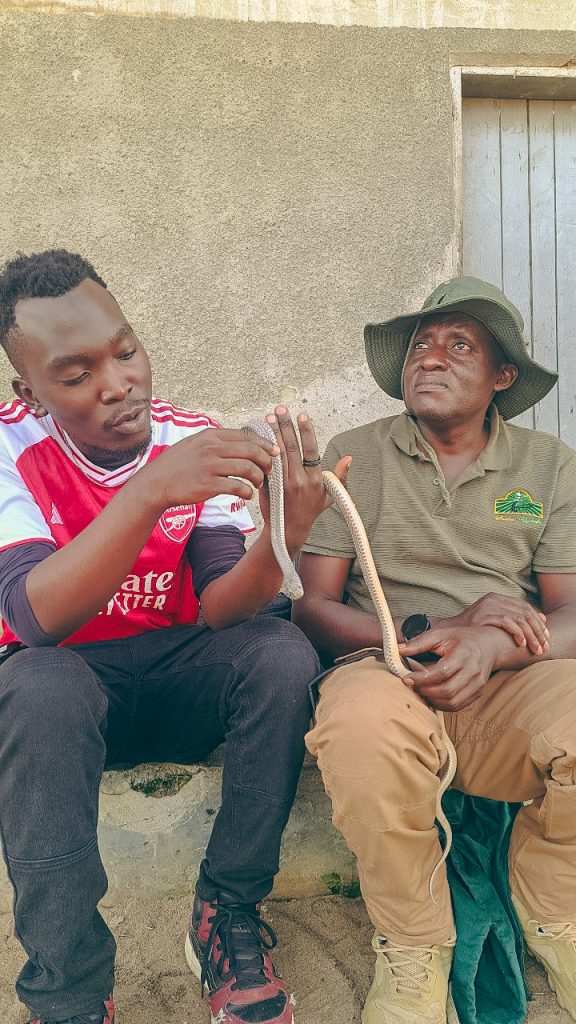
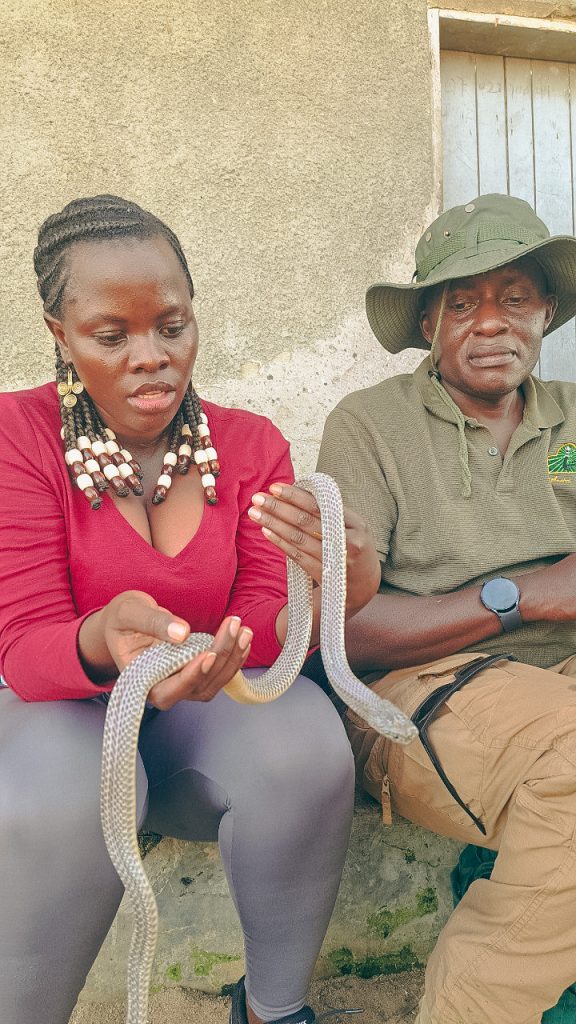
After leaving the island, participants experienced another unforgettable moment when they had an encounter with a moulting non-venomous Congo File Snake that Mr James had come along and left it behind as one of the rules of visiting Musambwa Island, no animals were allowed to brought in the island.
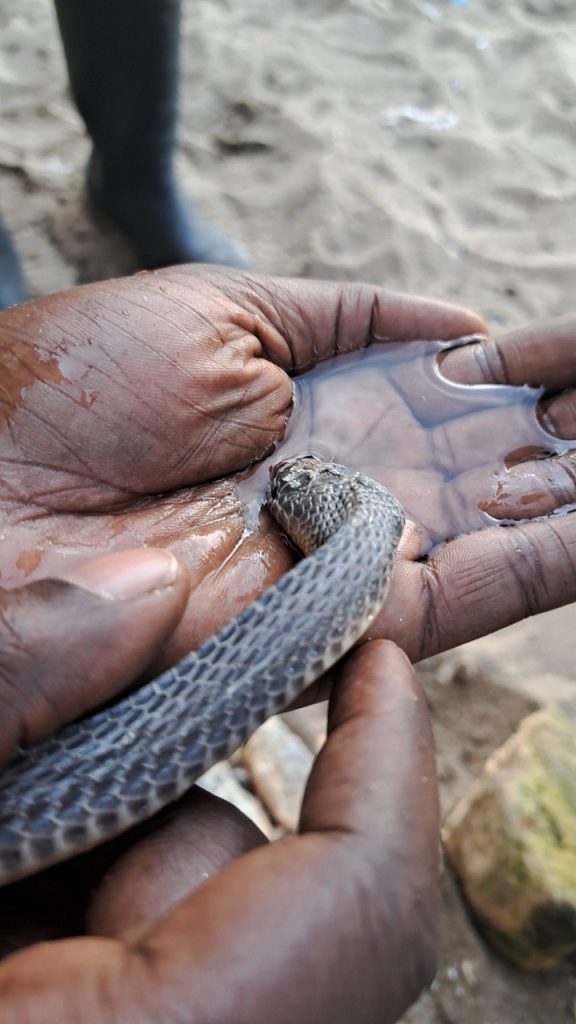
As he unpacked it, thirsty as it was, the snake calmly drank water as participants observed closely. Under expert guidance, visitors were shown how to safely handle the species, giving them a rare hands-on conservation learning experience. For some of the participants, this moment helped transform fear into curiosity and respect for reptiles.
Rare Snake Discovery at Malembo
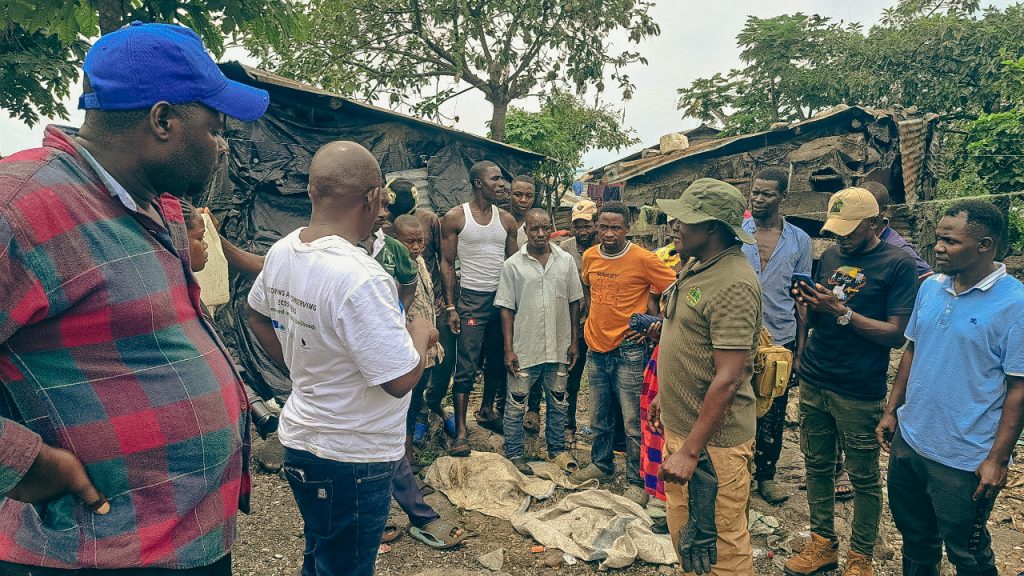
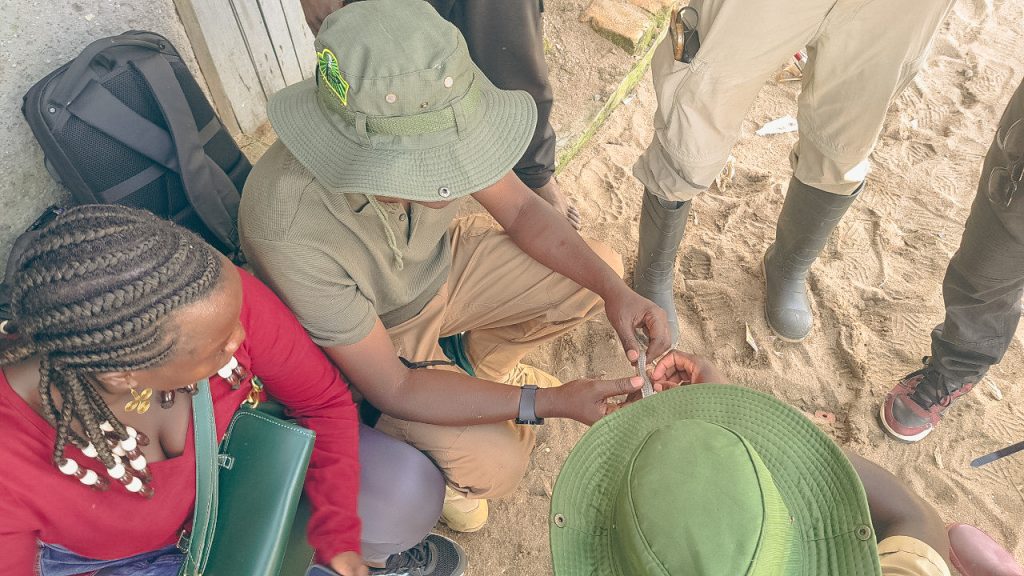
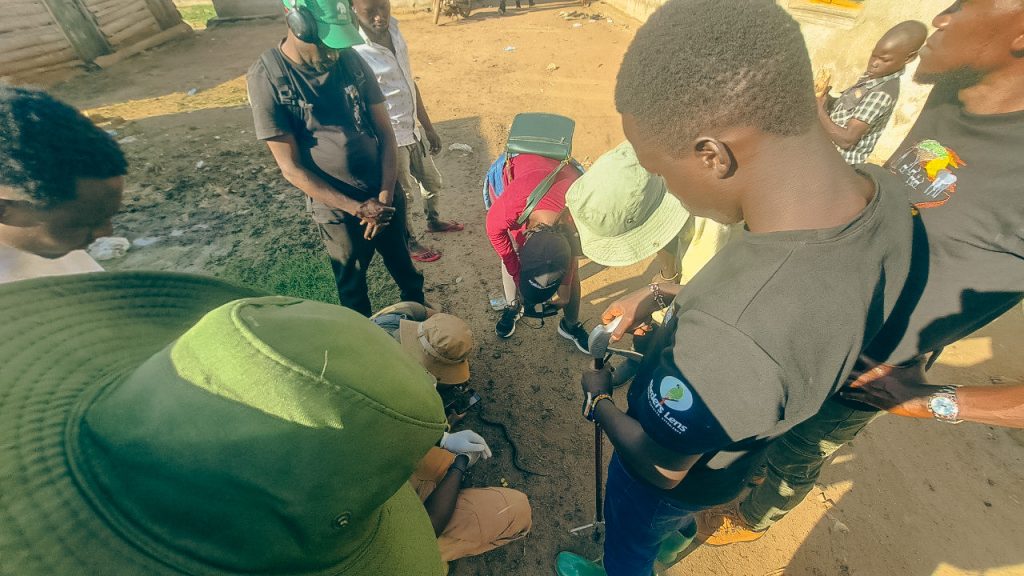
As the expedition was concluding, members of the community at Malembo informed us that a snake had been killed nearby. Our guide James Ntulume invited participants to examine the specimen for educational purposes. After careful observation, he identified the snake as the Gold’s Tree Cobra, one of the most remarkable and rarely encountered cobra species.
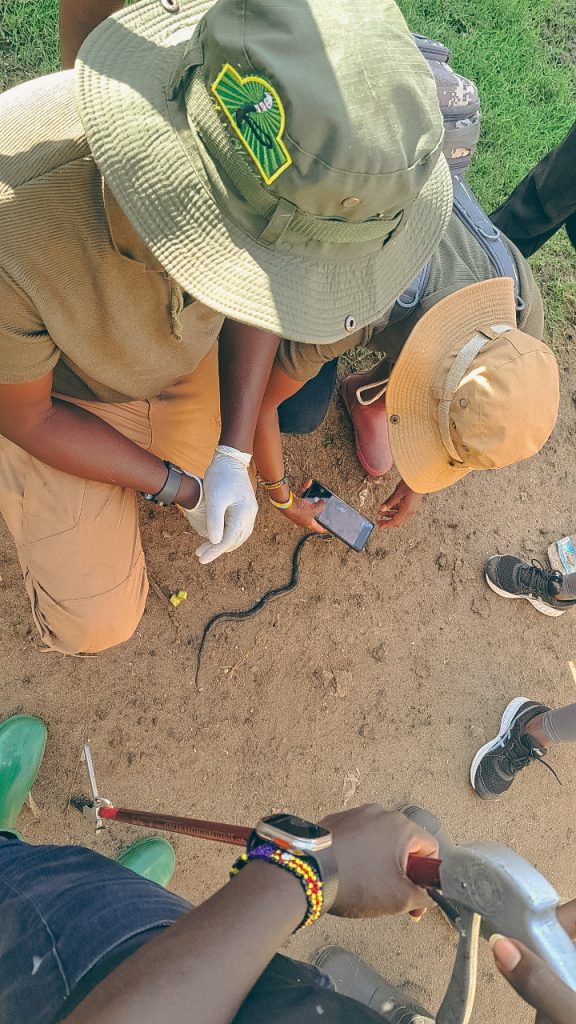
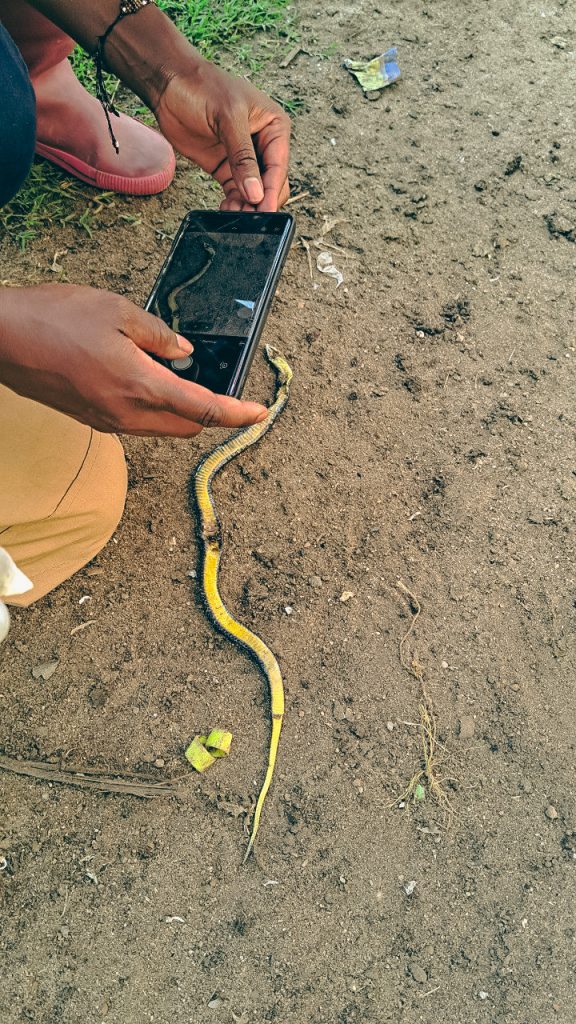
Participants gathered around as he explained the snake’s characteristics and ecological importance while photographs were taken for documentation.
Certificates and Appreciation to Participants
To recognize the courage and enthusiasm of those who joined the expedition, participants were awarded certificates of participation. The certificates symbolized their bravery in stepping beyond fear to learn about reptiles and conservation.
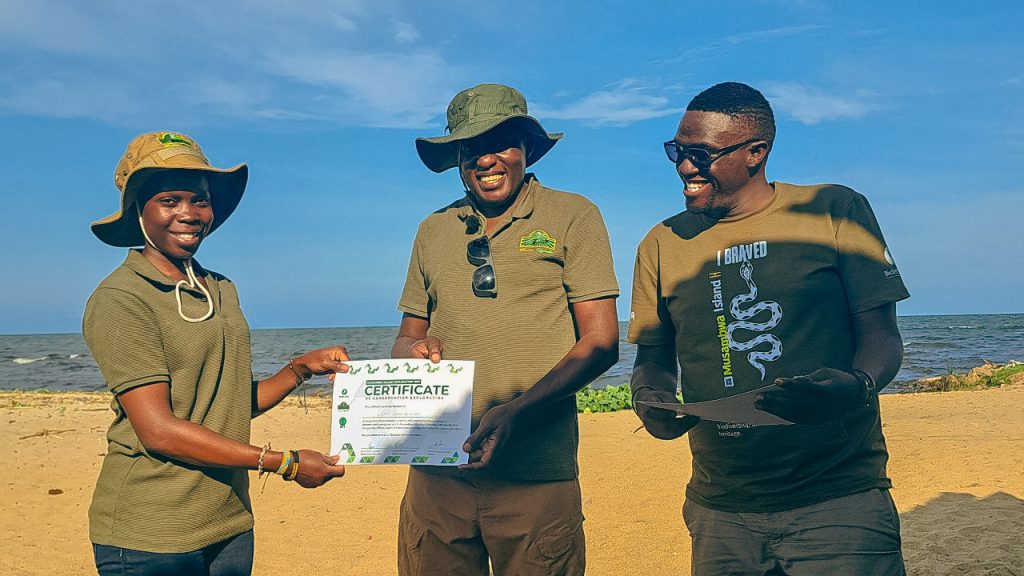
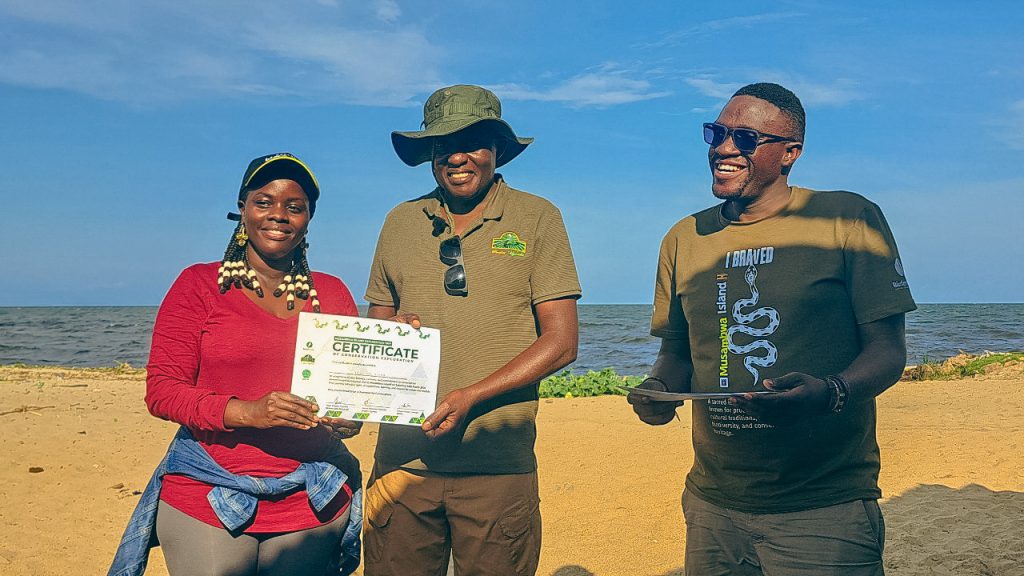
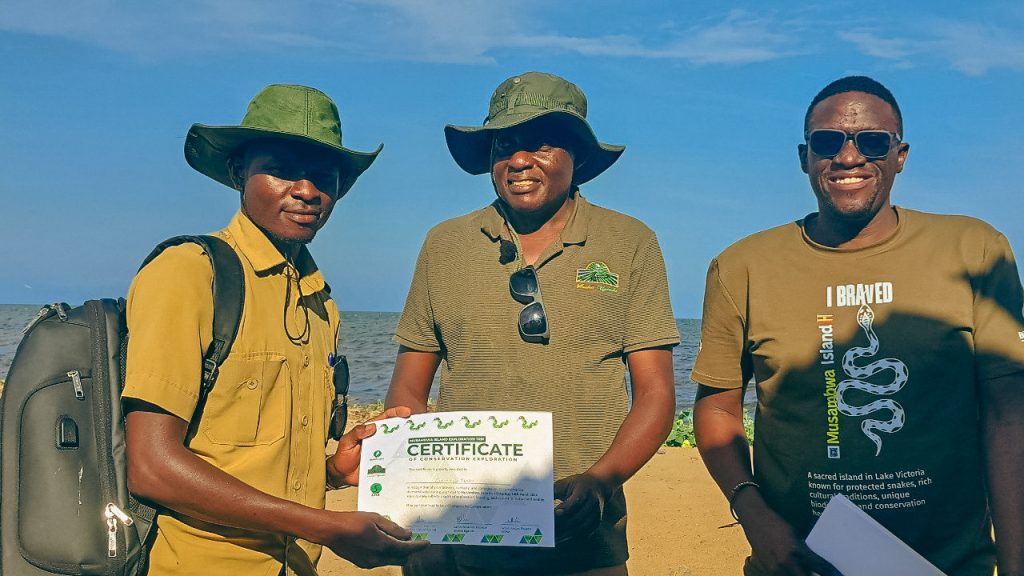
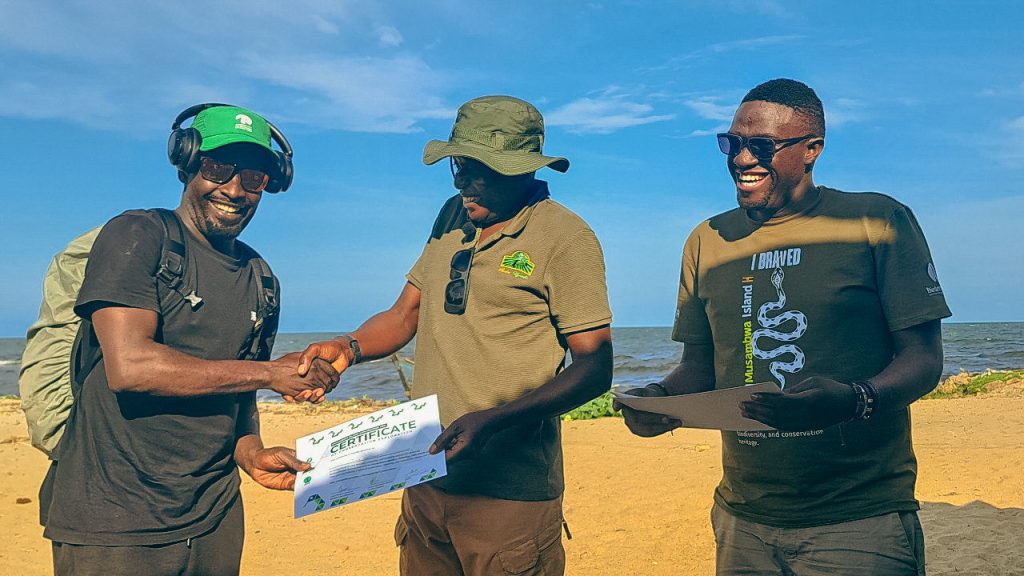
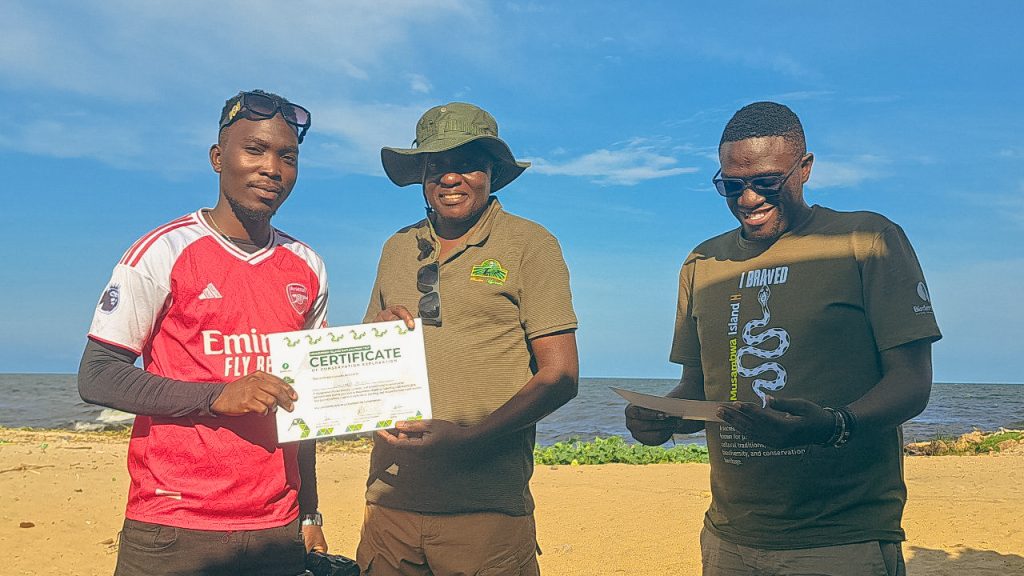
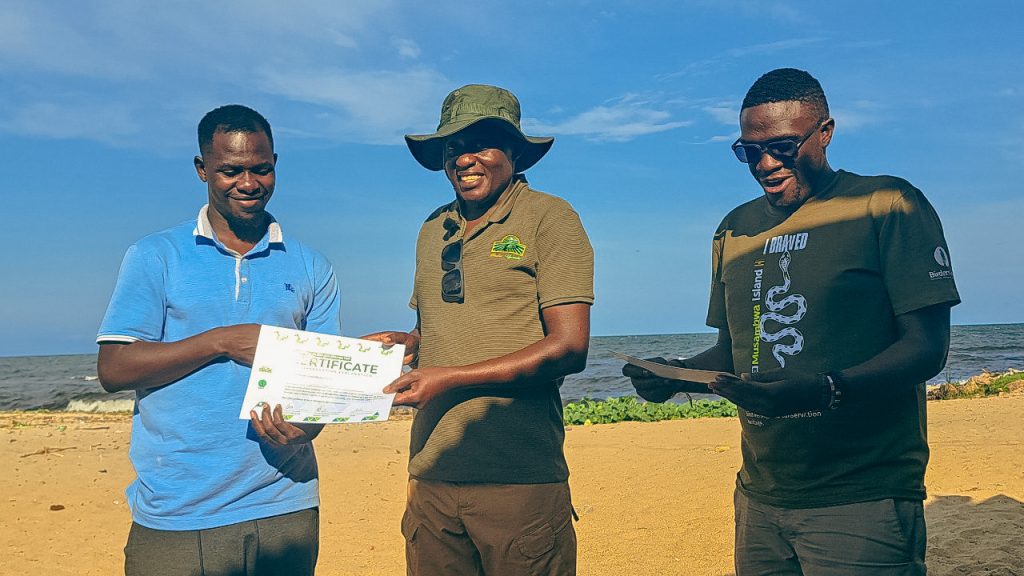
Birders Lens also presented appreciation gifts to key partners.
- Lead guide James Ntulume received a Sera Wild Coffee hamper and a branded T-shirt reading “I Braved Musambwa Island.”
- A similar appreciation T-shirt was presented to Ismail Hassan of AIYSIA in recognition of his support in making the activity successful.
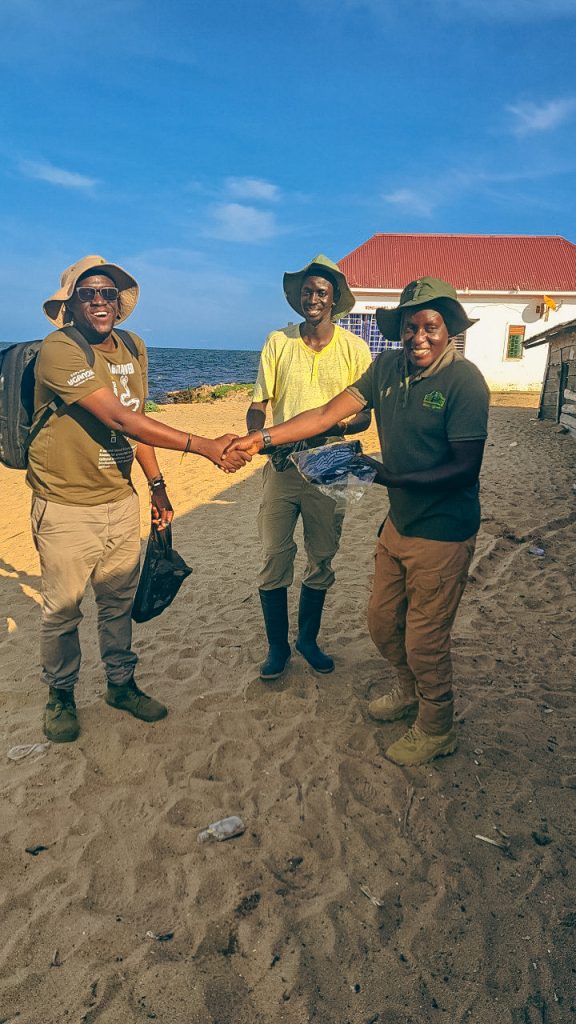
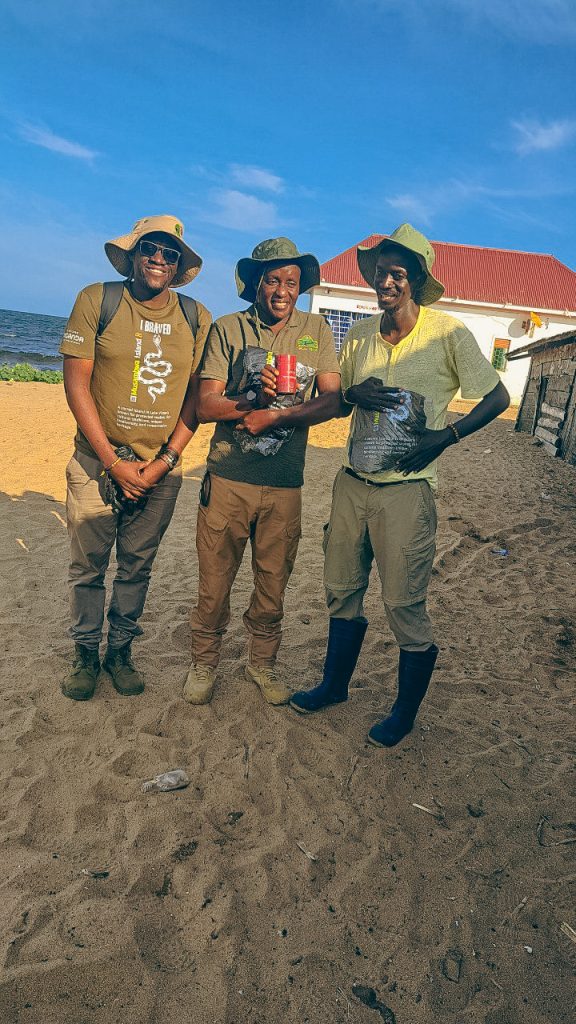
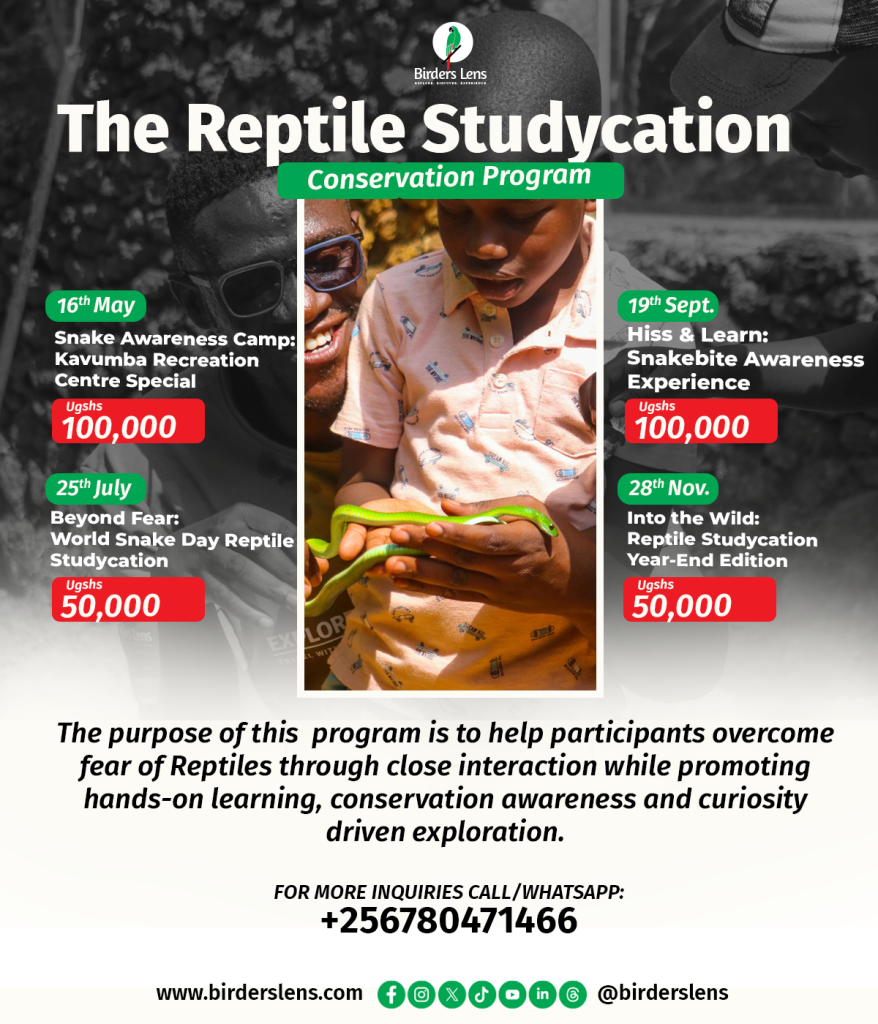
We also appreciate the presence of Jerry Onyango, manager of Kavumba Recreation Wildlife and Research Centre and the visionary behind Snake Awareness. We look forward to collaborating with him again during the upcoming Reptile Camp scheduled for 16th May 2026.
Birders Lens: Conservation Through Education
At Birders Lens, travel experiences are designed to go beyond tourism. Through reptile studycations and conservation field trips, we aim to educate participants about reptiles, especially snakes while addressing fear through knowledge.
Snakes are essential to healthy ecosystems because they help control rodent populations and maintain ecological balance.
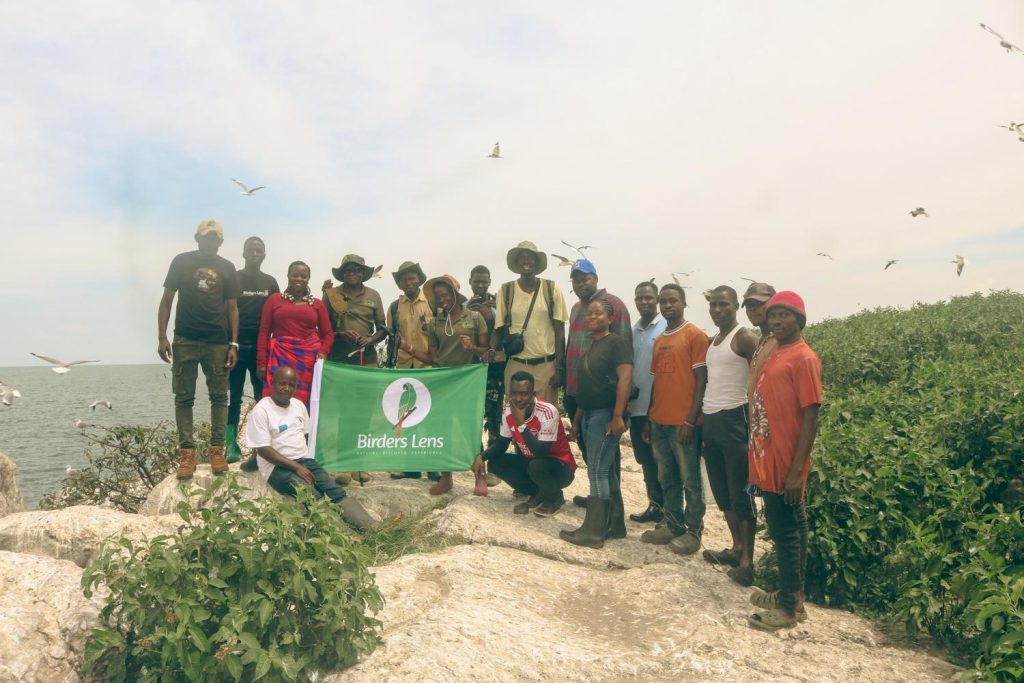
By bringing people closer to these often misunderstood animals, Birders Lens hopes to inspire a deeper appreciation for reptiles and promote conservation through education. Musambwa Island remains a powerful example that when communities respect nature, wildlife thrives.
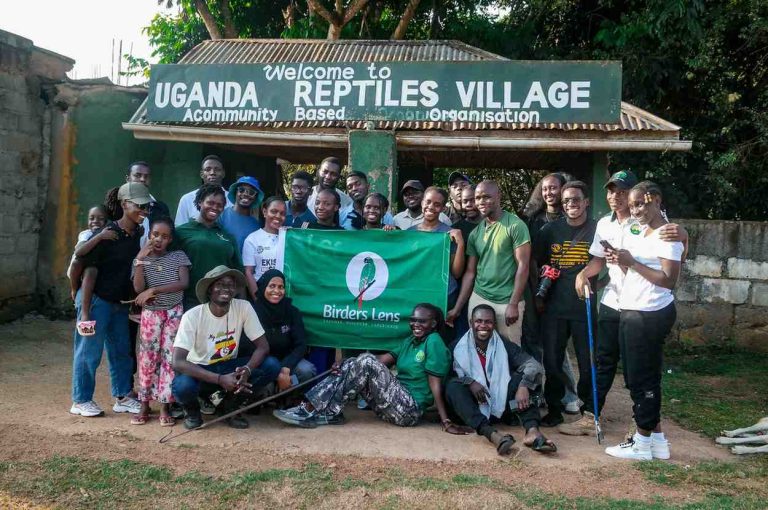
It’s amazing to read experiences from the team on their visit to the island to learn how communities exist with nature on the island
cialis australia reddit
cialis australia reddit
sildenafil citrate history
sildenafil citrate history
cyclosporine mylan
cyclosporine mylan
ajanta sildenafil reviews
ajanta sildenafil reviews
semaglutid tablett usa
semaglutid tablett usa